

POUGHKEEPSIE, N.Y. — Long before a bicep learns to pose, the mind decides whether you show up to the iron at all. While bodybuilding culture has historically obsessing over visible mirror wins—abs, symmetry, and vascularity—Coach Maxwell Alexander is redefining the sport’s fundamental equation: bodybuilding is 90% mind, 10% body, and your gut is sitting squarely in the captain’s chair. In this exclusive installment of Hudson Valley Style Magazine’s Emotional Wellness Series, Coach Maxwell explores the revolutionary science of the diet–microbiota–gut–brain axis, revealing how 15 iconic whole foods feed the trillion-microbe ecosystem driving your motivation, mental fortitude, and lifelong gains.
You Are What You Eat, So Make It Iconic – Bodybuilding Nutrition with Coach Maxwell Alexander – By Maxwell Alexander, MA, BFA, Athlete, Certified Fitness Trainer, Bodybuilding, Sports Nutrition and Men’s Wellness Coach

Bodybuilders love to photograph the visible result: shoulders, abs, quads, symmetry, vascularity, and the occasional bicep behaving as though it has retained its own publicist. Yet after years of training, I have come to understand bodybuilding as something far larger than the body. I have said it many times: the art and science of bodybuilding is 90 percent mind and 10 percent body. Training provides the stimulus, while the mind has to keep bringing us back—to the gym, to the kitchen, to recovery, and to the thousands of ordinary decisions from which an extraordinary physique eventually emerges.
Nutrition belongs squarely inside that 90 percent. Food determines far more than whether we hit a protein target. It influences energy availability, recovery, digestion, satiety, and the physiological environment in which we attempt to train. Emerging research into the microbiome adds another extraordinary dimension: diet also interacts with a vast ecosystem of microorganisms living inside the gastrointestinal tract, and those organisms participate in a two-way communication network between gut and brain associated with cognition, stress, and emotional functioning. Researchers now describe this relationship as the diet–microbiota–gut–brain axis.
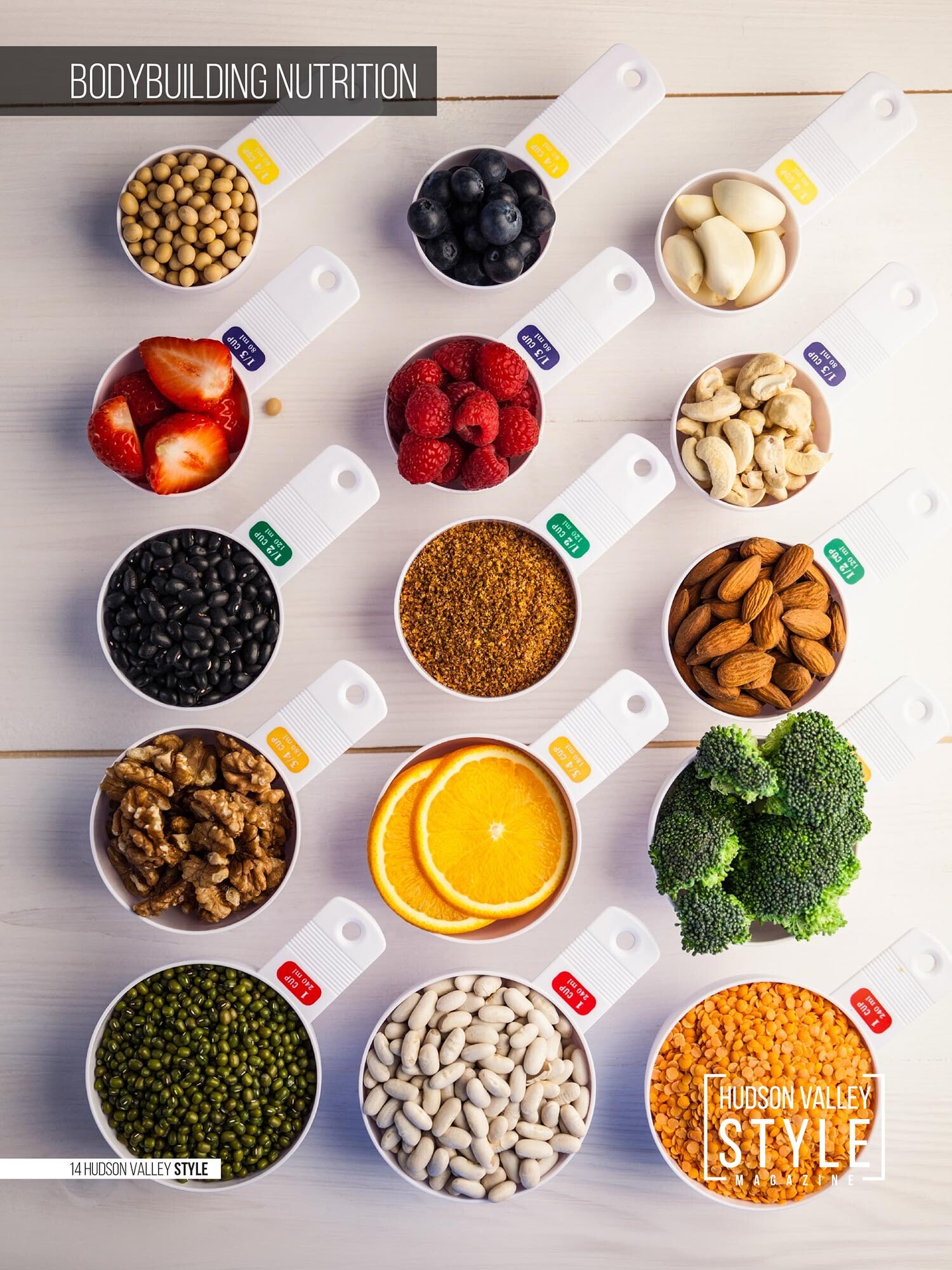
For the online edition of my original Hudson Valley Style Kitchen Edition/Culinary Wellness story, “You Are What You Eat—So Make It Iconic,” I wanted to take those colorful measuring cups of berries, beans, nuts, seeds, and vegetables beyond their original nutritional snapshots and into our Emotional Wellness Series. Because building muscle is fabulous. Building a life in which you still want to train ten, twenty, or thirty years from now is considerably more iconic.

Bodybuilding Is a Journey, and the Brain Has to Come Along
Every January, gyms become temporary monuments to human optimism. New shoes. New shaker bottle. New playlist. Perhaps enough caffeine to establish diplomatic relations with another dimension. Then ordinary life returns.
The problem with treating fitness as a burst of motivation is that bodybuilding requires precisely the opposite mentality. Muscle is accumulated slowly. Technique develops slowly. Bodies adapt. Goals change. Aging changes the conversation again. Bodybuilding is a journey rather than a destination, and sustainable nutrition provides the biological infrastructure that allows us to remain on that journey.
A stimulant can manufacture alertness for an afternoon. It cannot construct a sustainable relationship with training. When I place nutrition inside my “90 percent mind” philosophy, I mean that our ability to train consistently depends upon the entire human being showing up: attention, motivation, emotional regulation, energy, pleasure, patience, and recovery. Food participates in all of them.
This also belongs in our ongoing conversation about modern masculinity. Generations of old-school bodybuilding culture taught men that screaming at themselves, ignoring pain, hating their bodies into submission, and treating every meal like punishment somehow demonstrated strength. Very butch. Very 1987 basement gym. Learning how your nervous system, metabolism, emotions, recovery, and gut actually work requires considerably more strength than abusing the organism you expect to carry you through life.

Meet Your Other Nervous System: Why the Gut Became the “Second Brain”
Calling the gut our “second brain” sounds like wellness poetry, but there is real anatomy behind the nickname. Embedded throughout the gastrointestinal tract is the enteric nervous system, an enormous neural network capable of coordinating much of digestion locally. Meanwhile, communication between the gastrointestinal system and the central nervous system travels in both directions through neural, endocrine, metabolic, and immune pathways, with the vagus nerve serving as one important communication route. A major review in Nature Reviews Microbiology describes this gut-to-brain and brain-to-gut communication as a complex signaling network integrating information from both our internal physiology and external environment.
Then we discovered another character in the plot: the microbiome.
Trillions of microorganisms inhabit the gastrointestinal tract. They metabolize components of what we eat and generate compounds that can participate in immune, metabolic, and neural signaling. Current research points to mechanisms involving microbial metabolites, including short-chain fatty acids, alongside immune signaling, hormones, and neural pathways. The brain also talks back, influencing gastrointestinal motility, secretion, and the environment in which microbial communities live.
So emotional wellness does not occur exclusively between our ears. Brain, body, food, microorganisms, hormones, immune activity, and environment participate in an ongoing biological conversation.
That makes lunch considerably more dramatic.

Your Microbiome Has Entered the Emotional Wellness Conversation
The relationship between gut microbes and mental health has become a serious field of investigation. Researchers have identified associations between microbiome composition and psychiatric conditions including depression and anxiety while studying possible mechanisms involving the vagus nerve, immune system, stress-response pathways, and microbial metabolites.
Here bodybuilding offers a useful intellectual discipline: association and causation are different things. A review in Nature Mental Health emphasizes that scientists are still working to distinguish causal effects from correlations and complex bidirectional relationships. The microbiome matters, but science has yet to discover one glamorous bacterium capable of making Mondays emotionally fabulous.
What researchers can say with much greater confidence is that diet strongly influences the composition and function of the gut microbiota. A major review published in Nature Metabolism examines how dietary patterns, microbial communities, cognition, and emotional functioning interact across what researchers describe as the diet–microbiota–gut–brain axis.
For me, that places nutrition beautifully within emotional wellness. Food cannot replace mental-health care when care is needed. Food is, however, one of the environmental inputs our nervous system encounters every single day.

Diversity on the Plate, Diversity in the Gut
This is where the colorful little cast from my original Kitchen Edition story starts looking less like a nutritional checklist and more like an ecosystem.
Blueberries and raspberries bring fiber and polyphenols. Beans and lentils bring plant protein, complex carbohydrates, and fiber. Almonds, walnuts, cashews, and flaxseed introduce fats, fiber, and micronutrients. Broccoli brings cruciferous plant compounds. Garlic contributes its own family of bioactive compounds. Soy adds protein alongside fiber and phytochemicals. The original spread was deliberately abundant rather than restrictive.
That diversity matters because humans are feeding more than human cells when we eat. Dietary components that escape digestion in the upper gastrointestinal tract become substrates for microbial metabolism farther down the digestive system. Different microbes possess different metabolic capabilities, which is one reason dietary variety has become such a compelling subject in microbiome research.
Bodybuilding culture can become obsessed with reduction: protein, carbohydrates, fat, calories. Those numbers matter enormously when we have specific physique goals. Yet a blueberry and a spoonful of sugar can contribute carbohydrates while representing radically different biological packages. Whole foods arrive with fiber, micronutrients, phytochemicals, and structures that interact with digestion and microbial metabolism.
Macros tell us how much. Food diversity helps tell us what.

Protein Builds Muscle. Plants Help Build the Environment
Nobody is confiscating the chicken breast.
For hypertrophy, adequate dietary protein remains foundational. Bodybuilding nutrition becomes far more compelling when we stop imagining protein as the entire production and start thinking about the physiological environment in which muscle growth has to occur.
The original Kitchen Edition list deliberately included plant-protein sources such as soybeans, black beans, green peas, white beans, and lentils alongside nuts, seeds, fruit, and vegetables. The combination offers a more sophisticated model for sports nutrition: obtain adequate protein and total energy for the training objective while maintaining dietary diversity around those targets.
A bodybuilding plate can serve hypertrophy while remaining colorful, fiber-rich, nutritionally varied, and genuinely pleasurable. Adherence matters. The theoretically perfect diet that makes you miserable by Thursday has limited value to a bodybuilder planning to remain strong for decades.

Can Gut Bacteria Influence Our Desire to Exercise?
Here is where the science becomes wonderfully strange.
A landmark Nature study on the microbiome and exercise motivation identified a gut–brain pathway in mice in which microbiome-derived signals influenced sensory neurons, dopamine signaling, exercise motivation, and performance.
Read the species again: mice. We cannot turn that experiment into the claim that eating lentils will magically make a human crave squats.
Conceptually, however, the research is extraordinary. Motivation for physical activity—something athletes often frame purely as discipline, personality, or willpower—may also have biological inputs reaching from microorganisms in the intestine toward reward circuitry in the brain.
Suddenly my 90-percent-mind philosophy acquires a microscopic supporting cast.

The 15 Iconic Foods: From Kitchen Edition to Bodybuilding Kitchen
Soybeans bring plant protein and fiber. Blueberries, strawberries, and raspberries contribute fiber, vitamin C, and polyphenol-rich plant diversity. Garlic adds powerful flavor alongside bioactive plant compounds. Cashews, almonds, and walnuts provide energy-dense fats, minerals, and satisfying texture. Black beans, white beans, green peas, and lentils deliver combinations of protein, complex carbohydrates, minerals, and fiber. Flaxseed contributes fiber and alpha-linolenic acid, while oranges and broccoli broaden the range of micronutrients and phytochemicals entering the diet.
- Soybeans bring complete plant protein to support muscle repair and growth, along with fiber that feeds beneficial gut microbes. Their isoflavones add another family of bioactive plant compounds to the mix. Blueberries, strawberries, and raspberries arrive loaded with vitamin C, fiber, anthocyanins and other polyphenols—the colorful plant compounds being studied for their antioxidant, anti-inflammatory and microbiome interactions. For the bodybuilder, berries also make adding carbohydrates and plant diversity considerably more glamorous than staring sadly into another container of beige meal prep.
- Garlic brings sulfur-containing compounds alongside flavor, which deserves its own nutritional respect because food we genuinely enjoy is food we are more likely to keep eating. Garlic also contains prebiotic carbohydrates that can be metabolized by gut bacteria. Cashews, almonds, and walnuts contribute energy-dense unsaturated fats, fiber, protein and minerals including magnesium. Walnuts add alpha-linolenic acid, a plant-based omega-3 fatty acid, while nuts as a group give the microbiome another fibrous plant food to work with. For the mind and body, fats also matter structurally: our nervous system and cell membranes were never designed around the aesthetic ambitions of a zero-fat rice cake.
- Black beans, white beans, green peas, and lentils may be the bodybuilding kitchen’s magnificently unsexy overachievers. They combine plant protein with complex carbohydrates, fiber, resistant starch and minerals, supporting training energy and satiety while delivering fermentable material to intestinal microbes. When gut bacteria metabolize certain fibers and resistant starches, they can produce short-chain fatty acids, including butyrate, acetate and propionate—microbial metabolites now central to research on intestinal health, metabolism, immune signaling and the gut–brain axis.
- Flaxseed contributes fiber, lignans and alpha-linolenic acid while giving gut microbes additional plant material to metabolize. Grinding it makes its nutrients more accessible than swallowing the seeds whole. Oranges deliver vitamin C, folate, potassium, fiber and citrus phytochemicals, especially when we eat the fruit rather than separating its sugar from its fibrous architecture as juice. Broccoli closes our little microbiome dinner party with fiber, vitamin C, vitamin K, folate and glucosinolates—the cruciferous compounds that help make broccoli nutritionally far more sophisticated than the steamed green punishment many of us remember from childhood.
Across all fifteen foods, the nutritional story becomes bigger than protein, antioxidants, omega-3s, magnesium or any single fashionable compound. We are giving the body amino acids, carbohydrates, fats, vitamins and minerals needed to train and recover; giving the mind the nutritional foundation required for a functioning nervous system and sustained energy; and giving the microbiome a rotating buffet of fibers, resistant starches and phytochemicals from different plant families.
The point is larger than declaring fifteen foods “superfoods.” There are no velvet ropes outside the digestive tract, and blueberries have yet to hire a publicist. The real star is the pattern: diversity, adequacy, consistency, and pleasure. In bodybuilding, that pattern matters because the greatest nutritional strategy in the world accomplishes very little when we cannot happily live with it long enough for the body—and the person inhabiting it—to evolve.

Emotional Wellness Begins Before We Call It Emotion
Our Emotional Wellness Series explores wellness through movement, landscape, travel, identity, and lived experience. Nutrition belongs in that conversation because an emotion is experienced psychologically while existing within a biological organism.
Sleep affects mood. Physical activity affects mood. Stress affects digestion. Diet influences the microbiome. Gut microorganisms produce metabolites capable of interacting with immune, endocrine, metabolic, and neural systems. The brain sends signals back toward the gut. Researchers therefore describe the microbiota–gut–brain relationship as bidirectional, rather than a simplistic highway running from salad to happiness.
That distinction matters. Emotional wellness cannot be reduced to a menu, and mental illness cannot be explained away as poor nutrition. Contemporary research gives us something far richer: another example of how deeply interconnected the human organism really is.

Feed the Bodybuilder You Want to Become in Ten Years
Bodybuilding taught me to think in years.
A workout gives us a pump. Training gives us adaptation. Consistency gives us a physique. Time gives us perspective.
Nutrition works on a similar horizon. I am far less fascinated by the meal promising to make somebody “shredded” next week than by the way we eat when nobody is counting down to summer. Can the food support training? Can we digest it comfortably? Does it provide enough protein and energy? Does it offer plants, fiber, fats, and micronutrients? Is there enough variety? Does eating it bring pleasure? Can we live this way?
Those questions move bodybuilding toward longevity, emotional wellness, and self-knowledge.
The most valuable bodybuilding program may ultimately be the one we can sustain long enough to discover who we become through it. A January workout can give us a magnificent pump. A decade of nourishing the body, challenging it, recovering it, understanding it, and returning to the iron gives us something much more compelling.
It gives us the journey.
And if we really are what we eat, darling, we might as well make the whole thing iconic.
Further Reading and Resources
- For a deeper look at the emerging science behind this story, read “Feeding Gut Microbes to Nourish the Brain: Unravelling the Diet–Microbiota–Gut–Brain Axis” in Nature Metabolism, which reviews connections among diet, gut microorganisms, cognition, and emotional functioning.
- The Nature Reviews Microbiology review on microbiota–neuroepithelial signaling across the gut–brain axis examines biological pathways through which microorganisms, intestinal sensory systems, and the brain communicate.
- For the crucial distinction between promising microbiome research and claims that run ahead of the evidence, see the Nature Mental Health review examining causative, correlative, and bidirectional roles of the gut microbiota in mental health.
- For the fascinating experimental connection between gut microorganisms and exercise motivation, see the Nature study “A Microbiome-Dependent Gut–Brain Pathway Regulates Motivation for Exercise”. The work was conducted in mice and should be understood as mechanistic research rather than a direct nutritional prescription for humans.
- Continue exploring the relationship between body, mind, environment, and lived experience through Hudson Valley Style Magazine’s Emotional Wellness Series and our evolving conversation about strength, identity, and healthier models of manhood in the Modern Masculinity Series.