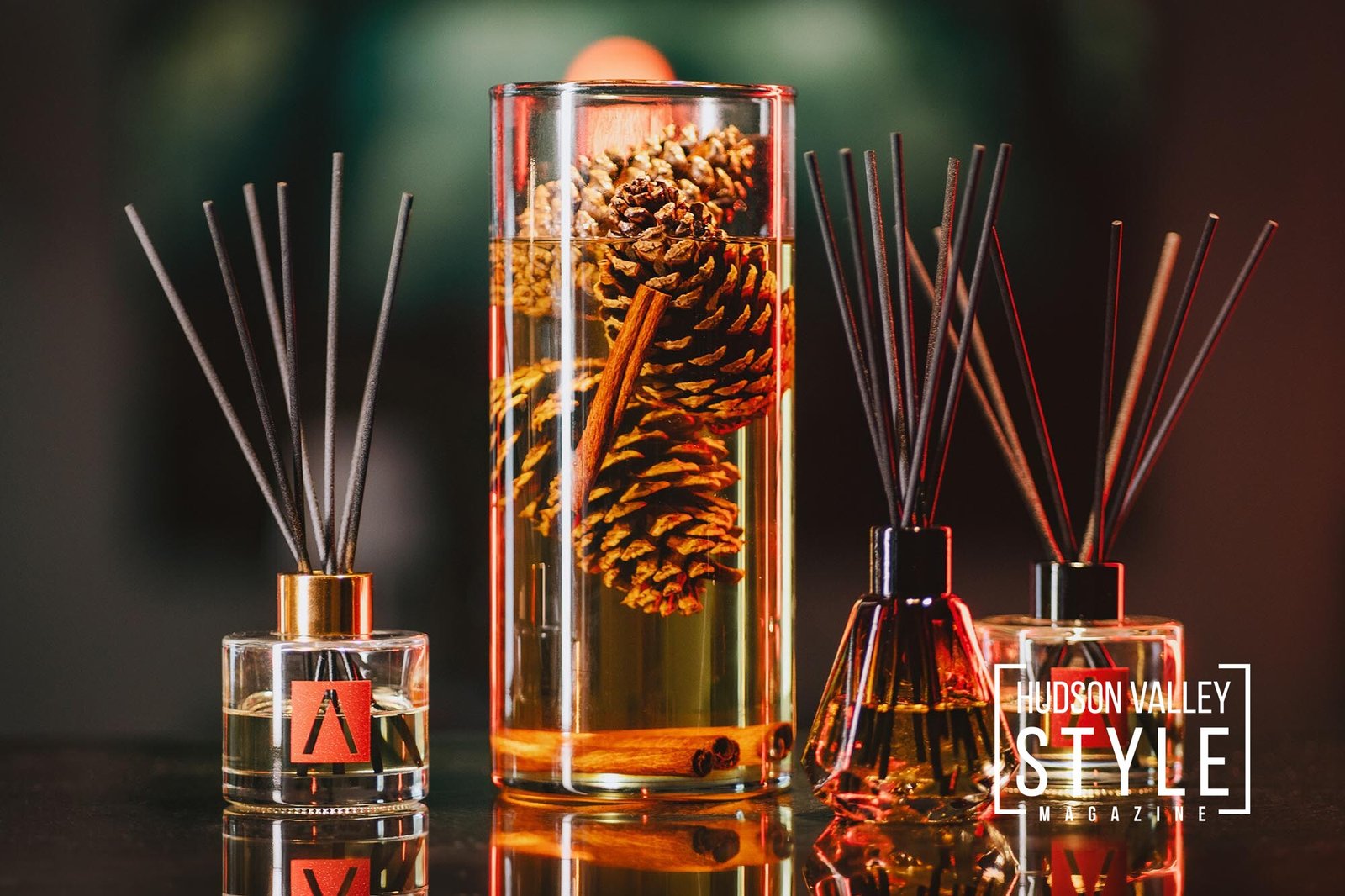
POUGHKEEPSIE, N.Y. — Fragrance can alter the emotional character of a room without moving a wall, changing the light or announcing its presence from across the property. In Episode 2 of Experiential Hospitality 101, Maxwell Alexander examines how subtle aromatherapy, wellness aesthetics, psychotherapeutic objects, photography and scent-evoked memory converge inside the hospitality environment. Grounded in the research of Charles Spence, Rachel Herz and Brenda Cowan—and brought into practice at Alluvion Vacations wellness retreats across the Hudson Valley and Catskills—the visual study approaches the reed diffuser as both an aromatic instrument and an experiential object capable of shaping expectation, atmosphere and the memories guests carry home.
The Architecture of Scent: Aromatherapy, Memory, and Sensory Wellness in Experiential Hospitality – Experiential Hospitality 101 with Maxwell Alexander, MA(FIT)/BFA(SVA) – Photography and Visual Study by Maxwell Alexander
Scent changes our perception of space without changing its physical structure. Lavender, sandalwood, eucalyptus, rosemary, cedarwood, chamomile and clove each carry their own sensory character, yet the experience often begins before fragrance fully registers. A glass vessel, botanical materials, reeds, warm amber tones and the visual language of an aromatic object can already suggest wellness, ritual and care. In experiential hospitality, that first visual encounter matters because the brain begins constructing an emotional interpretation of the environment immediately, while scent enters as a more subtle second layer.

My earlier exploration of aromatherapy-infused wellness retreats in the Hudson Valley and Catskills approached fragrance through the lived experience of travel. Episode 2 of Experiential Hospitality 101 moves further into the psychology of perception: how wellness aesthetics, aromatic objects, botanical scent, memory and photography can work together to create an immersive sensory environment.
Wellness Begins Before We Smell Anything
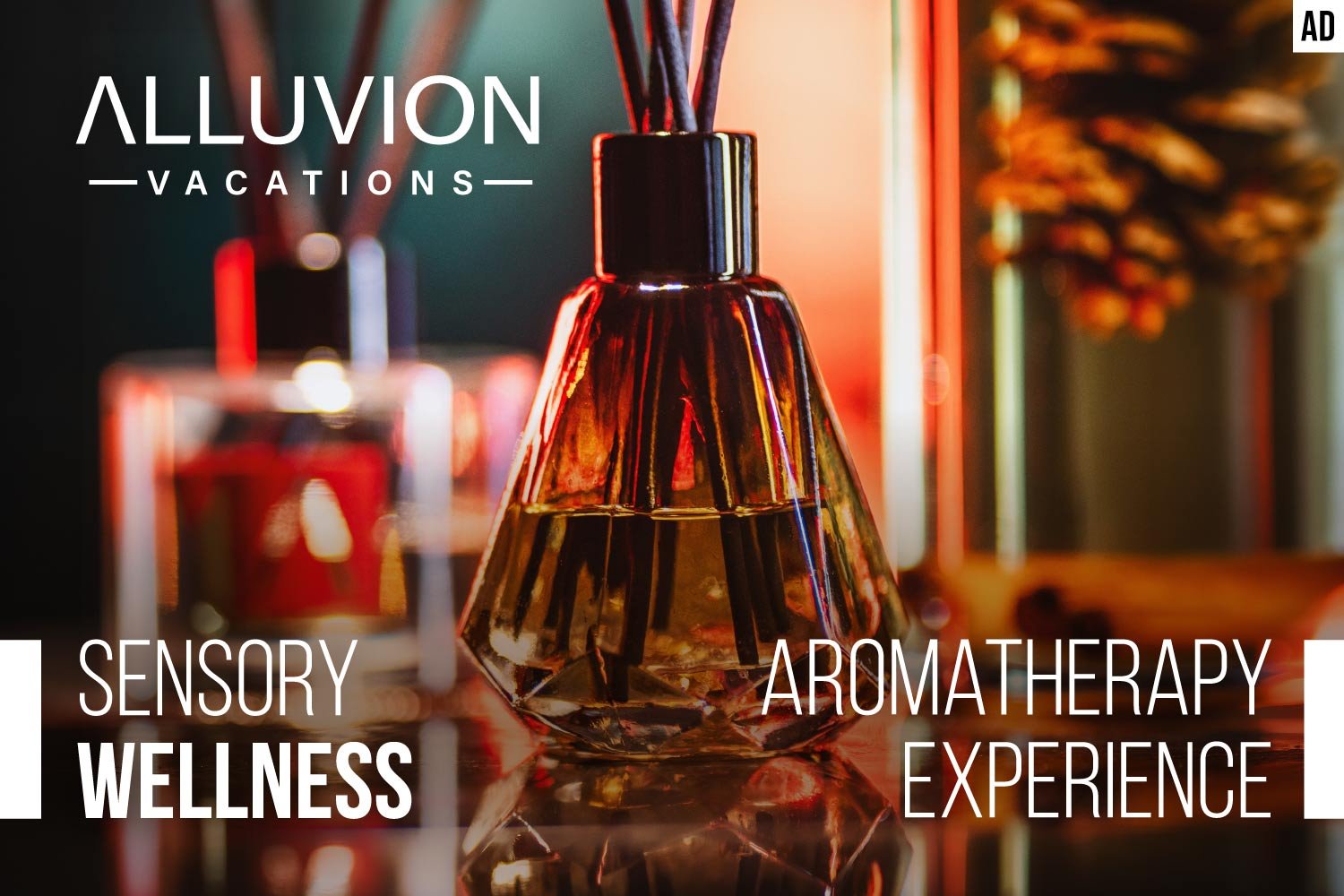
Before a guest ever steps across the threshold, the sensory journey is already underway through fine art editorial photography. By composing and capturing still-life vignettes of these aromatherapy elements—warm light catching translucent amber glass, natural reeds against raw timber, subtle botanical ques—the photograph acts as a visual invitation rather than a simple product shot. Rendered in narrative photo stories across editorial media, these images establish an immediate emotional register of warmth, quietude, and ritual care. The mind engages with the aesthetics of the experience long before the body arrives, allowing visual expectation to pave the way for the ambient scent that will later complete the space.

Human perception never belongs to a single sense. Oxford experimental psychologist Charles Spence has written extensively about multisensory environments and the ways sight, smell, sound, touch and taste interact to shape experience. In his research on the multisensory hotel experience, Spence argues that hospitality design has much to gain from engaging the guest’s nonvisual senses alongside the visual environment.
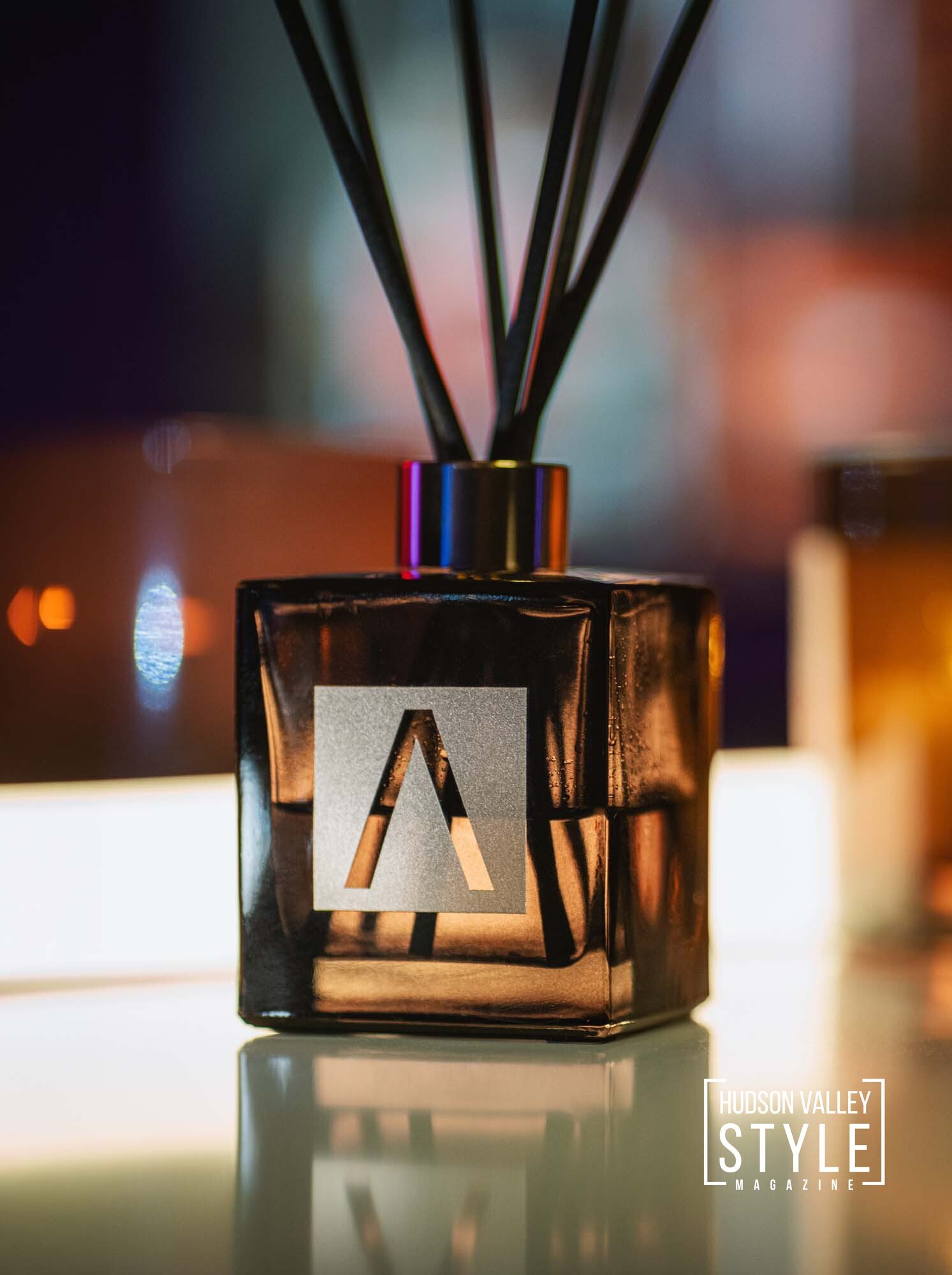
This is where wellness aesthetics become central to my theory of experiential hospitality. Before a guest reaches a reed diffuser and detects even a trace of fragrance, the object is already communicating. The proportion of the bottle, translucency of the oil, reeds extending vertically into space, botanical ingredients nearby, reflected light and the relationship of the object to the surrounding interior establish a visual expectation of ritual and sensory pleasure. The mind begins entering the experience through sight, while fragrance later reinforces what the environment has already suggested.

The Aromatherapy Object as a Psychotherapeutic Object
The visual dimension brings the conversation back to Professor Brenda Cowan and her theory of Psychotherapeutic Object Dynamics. Cowan’s research examines the psychological relationships that form between people and objects and the ways those relationships participate in meaning-making, emotional experience and wellbeing.
An aromatherapy diffuser fits beautifully within that framework. It is functional, symbolic and aesthetic at once. Visually, it can communicate nature, restoration, ritual and care. Through fragrance, it extends beyond its physical boundaries and enters the atmosphere around it. Through memory, it can later become associated with a bath, a weekend away, a landscape or a specific emotional state. The object therefore participates in several layers of experience before, during and after the guest consciously engages with it.
This is also where psychotherapeutic object dynamics fits naturally into experiential hospitality. A wellness object does not need to announce itself as therapeutic. Its form, placement, associations and sensory presence can create psychological meaning through ordinary interaction with the environment.

Subtle Scent and the Multisensory Environment
The aromatherapy environments I am exploring in hospitality rely on reed diffusers rather than topical applications of essential oils. The distinction matters. Reed diffusers create passive ambient fragrance, and in these environments the scent is deliberately restrained. From across a room, the diffuser may register primarily as a visual object; fragrance becomes more perceptible only as the guest moves closer to it.
That subtlety is intentional. In his review of ambient scent and wellbeing in the multisensory built environment, Spence examines how olfactory atmosphere can influence mood and wellbeing while emphasizing that scent operates in conjunction with the other senses rather than as an isolated intervention.
Lavender may introduce a floral softness associated with rest, while sandalwood contributes warm woody depth that feels at home beside timber, leather and earth-toned interiors. Eucalyptus brings a fresher aromatic register that can complement bathrooms, steam and water. Rosemary feels herbal and culinary, cedarwood connects readily with forested landscapes, while chamomile and clove introduce softer floral and warm-spice dimensions. The goal is sensory coherence between scent, object, architecture, material and place rather than forcing one botanical into a universal emotional formula.

Aromatherapy, Relaxation and What the Research Says
Lavender remains one of the better-studied aromatic botanicals in the scientific literature. A 2023 systematic review of lavender essential-oil inhalation examined eleven randomized trials involving 972 participants; ten reported significant reductions in anxiety after lavender inhalation, while the authors also called for stronger and more standardized research.
Sandalwood demonstrates why fragrance research can be more nuanced than familiar categories such as “calming” or “energizing.” A study of East Indian sandalwood and alpha-santalol inhalation measured physiological responses and self-reported arousal in healthy adults. Sandalwood oil elevated pulse rate, skin conductance and systolic blood pressure, while alpha-santalol was associated with higher ratings of attentiveness and mood. The researchers concluded that perceived odor quality played an important role in the response.
For experiential hospitality, this complexity is far more useful than assigning each essential oil a simplistic emotional job description. Botanical aroma participates in perception through chemistry, personal association, expectation, cultural memory and the sensory context in which the fragrance is encountered.

Scent, Memory and the Emotional Geography of Travel
Olfaction also has an intimate relationship with autobiographical memory. Psychologist Rachel Herz and her colleagues used neuroimaging to compare personally meaningful memories triggered by odor and visual cues. Their research found stronger activation in the amygdala and hippocampal regions during recall triggered by a personally significant odor, accompanied by stronger emotional responses. The study offers neurobiological evidence for the emotional potency of odor-evoked memory.
This is where scent becomes especially compelling in travel. A guest may encounter sandalwood beside a fireplace, eucalyptus near a bath, lavender in a bedroom or rosemary in a kitchen. Over time, that aroma can become connected to the total experience surrounding it: landscape, temperature, light, architecture, companionship and emotional state. Fragrance becomes less an isolated amenity than a sensory coordinate inside memory.

Photography as a Map of the Intended Feeling
Photography adds another layer because the hospitality experience often begins long before arrival. When I photograph an aromatic object in warm light beside wood, stone, water, linen or botanical materials, I am photographing more than the object. I am photographing the feeling the environment is intended to create.
The image becomes a visual proposition: warmth, relaxation, intimacy, sensuality, restoration. A future guest encounters those feelings through photography before entering the property physically. Once there, the environment continues the experience through scent, touch, temperature, sound, privacy and spatial movement.
This relationship between image and physical experience is fundamental to experiential hospitality. Photography becomes the first threshold into the environment, allowing the imagination to begin inhabiting the space before the body arrives. When the physical property delivers the same emotional register captured in the photograph, visual storytelling and lived experience become part of one continuous sensory narrative.

From Wellness Amenity to Experiential Hospitality
Aromatherapy therefore fits naturally within the framework established in Episode 1 of Experiential Hospitality 101, where I explored relationships among art, nature, privacy, therapeutic objects and psychological experience. Scent adds another perceptual layer, while the diffuser itself brings Cowan’s psychotherapeutic object dynamics directly into the room.
The larger principle remains consistent: wellness can become part of the environment itself. A botanical object establishes visual meaning. Scent extends that meaning into the air. Architecture gives it spatial context. Nature provides geographic and emotional association. Privacy gives the guest enough psychological space to perceive all of it. Photography introduces the emotional vocabulary before arrival.
Experiential hospitality emerges through the relationship among these elements. The goal is sensory coherence: an environment whose aesthetics, objects, atmosphere, landscape and storytelling communicate a related emotional idea through different channels.

Experiential Hospitality in Practice at Alluvion Vacations
The practical application of these ideas can be experienced across Alluvion Vacations wellness retreats in the Hudson Valley and Catskills, where aromatic objects, natural materials, botanical fragrance and visual storytelling are integrated into the guest environment. Reed diffusers become part of a larger sensory composition shaped by architecture, landscape, lighting, privacy and the emotional character of each property. Their restrained fragrance rewards proximity and movement: a guest notices the object visually, approaches it, encounters its aroma and gradually connects that sensory moment with the surrounding place.

Guests have been raving about the resulting wellness atmosphere because the experience feels embedded in the retreat rather than added as decorative theater. A diffuser beside wood, stone, linen or locally inspired botanical materials communicates care through its appearance while releasing fragrance at an intimate scale. The aromatic encounter belongs to the room, the season and the landscape beyond the windows. Wellness becomes perceptible through the relationship among objects and senses, allowing relaxation to emerge through the environment without turning a private getaway into another aggressively scheduled self-improvement project.
Alluvion Vacations provides a living laboratory for experiential hospitality because each retreat allows theory to meet the body in real space. Guests encounter the property first through photography, then through architecture and visual composition, followed by scent, texture, temperature, privacy and movement. Their enthusiastic response to the wellness vibes reveals how strongly people perceive the emotional coherence of an environment, even when they never pause to name every element producing it. The experience succeeds as a whole: beauty prepares the imagination, fragrance deepens the atmosphere and memory carries the sensory identity of the retreat home.

The Architecture of Scent
A reed diffuser occupies only a small amount of physical space, yet its experiential reach can extend across expectation, atmosphere, perception and memory. A guest may first encounter it through photography, then as a visual object within the room, then as a subtle aromatic presence while moving through the space, and eventually as part of the remembered emotional geography of a trip.
That sequence is why aromatherapy belongs inside experiential hospitality rather than sitting beside it as another wellness amenity. The visual object prepares perception, fragrance enriches the sensory field, the surrounding environment gives both meaning, and memory carries the experience forward.
The architecture of scent is ultimately less concerned with how strongly a room smells than with how elegantly the senses are invited into the experience.
Research and Theoretical Sources
- Spence, Charles. “Sensehacking the Guest’s Multisensory Hotel Experience.” Frontiers in Psychology, 2022.
- Spence, Charles. “Using Ambient Scent to Enhance Well-Being in the Multisensory Built Environment.” Frontiers in Psychology, 2020.
- Cowan, Brenda. “Psychotherapeutic Object Dynamics: The Theory.” Psychotherapeutic Object Dynamics.
- Yoo, Onyoo, and Sin-Ae Park. “Anxiety-Reducing Effects of Lavender Essential Oil Inhalation: A Systematic Review.” Healthcare, 2023.
- Heuberger, Eva, Tapanee Hongratanaworakit, and Gerhard Buchbauer. “East Indian Sandalwood and Alpha-Santalol Odor Increase Physiological and Self-Rated Arousal in Humans.” Planta Medica, 2006.
- Herz, Rachel S., James Eliassen, Sophia Beland, and Timothy Souza. “Neuroimaging Evidence for the Emotional Potency of Odor-Evoked Memory.” Neuropsychologia, 2004.