

Modern masculinity has been sold as a costume: stoic, armored, heterosexual by default, and terrified of tenderness. My work exists to break that costume open from the inside—using the male form, desire, and beauty as proof that strength has always had a wider vocabulary than patriarchy allowed. Across my writing for Hudson Valley Style Magazine, my visual practice through Duncan Avenue Studios, homoerotic multimedia art projects in the GUY STYLE MAGAZINE (18+) and my fine-art print editions at HARD NEW YORK, homoerotic art becomes a public language: shame alchemized into pride, visibility treated as survival, and pleasure reclaimed as a legitimate form of truth-telling.
Modern Masculinity, Rewritten: A Queer Artist’s Field Notes from Maxwell Alexander – Art – LGBTQ+ – Duncan Avenue Studios – Presented by GUY STYLE MAG (18+) – The Modern Masculinity Magazine

The Body as Evidence, Not Performance
Masculinity gets policed most aggressively at the body—how it moves, what it signals, what it “permits” itself to want. That is why my art returns, again and again, to the male form: not as conquest or spectacle, but as evidence. In essays and visual editorials published through Hudson Valley Style Magazine, I have written repeatedly that the point has never been “pretty pictures”; it is the insistence that queer desire can be visible, unedited, and culturally significant—without asking permission.

Desire as a Political Material
When I write about phalluses, muscles, and sexuality, I am writing about power—who gets to name it, who gets to display it, and who gets punished for it. My homoerotic work, including long-form reflections published alongside my prints at HARD NEW YORK, treats desire as a political material. Modern masculinity only becomes honest when it stops treating desire as a threat and starts treating it as information about being alive.

Sensuality, Nature, and the Masculinity That Breathes
There is another register of masculinity that rarely appears in gyms, mirrors, or myths. It exists outdoors, at daybreak, where the body meets the world without choreography. In nature, masculinity sheds its urgency to perform and relearns how to feel. Skin responds to air. Muscles soften into posture rather than tension. Desire becomes observational, attuned, receptive. This form of masculinity does not dominate its surroundings; it listens to them.

That philosophy shaped Dew + Desire: A Morning in the Catskills, a fine-art photo story rooted in nakedness as presence rather than provocation. Sexuality here echoes among wet grass, wildflowers, and early light not to shock but to belong. Dew clings to skin the same way it gathers on petals. A thigh mirrors the curve of a leaf. Breath slows to match the quiet labor of the morning. Masculinity, here, is porous — open to sensation, unguarded, and deeply alive.
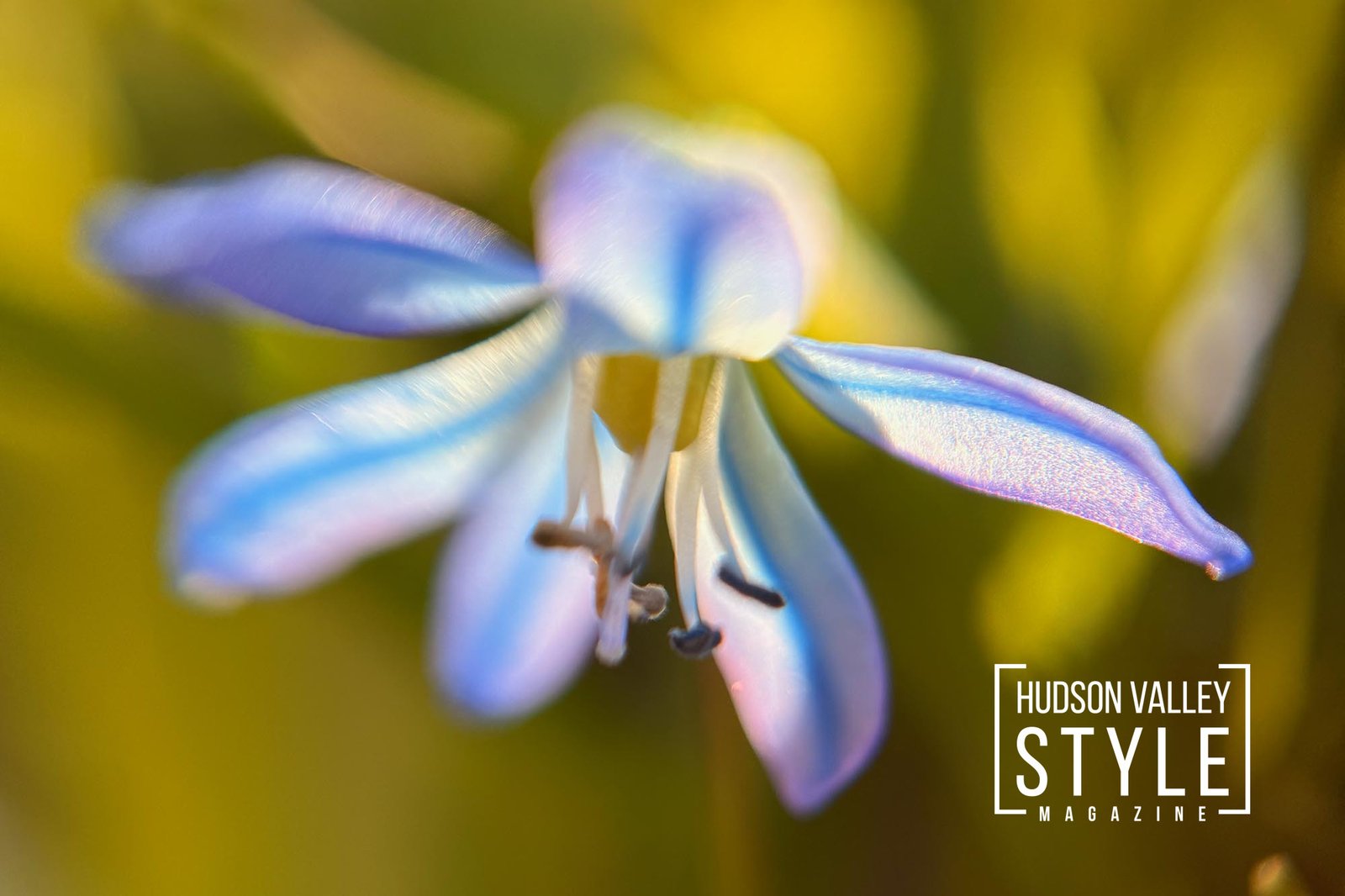
Intimate closeups of nature play a critical role in this visual language. They refuse the false binary between strength and softness. Bloom, like masculinity, requires exposure. In placing the nude male body among blossoms and moisture, the work proposes a masculinity that honors vulnerability as a condition of beauty. To be gay in nature, unclothed and unarmored, is to acknowledge that desire is ecological — something that emerges naturally when the body among blossoms and moisture, the work proposes a masculinity that honors vulnerability as a condition of beauty. To be gay in nature, unclothed and unarmored, is to acknowledge that desire is ecological — something that emerges naturally when the body is allowed to exist without shame.

This is another way modern masculinity expresses itself: through attunement instead of conquest, through sensual awareness instead of control. It is masculinity that does not rush to harden, does not flinch at tenderness, and does not apologize for wanting to feel the world intimately. In dew, in flowers, in morning air, the body remembers what it already knew — that masculinity can be gentle, erotic, and expansive without losing its gravity.

AI as Amplifier, Not Replacement
My writing on AI and art consistently frames it as an amplifier rather than a replacement—an extension of the artist’s nervous system, not a substitute for vision. In multiple essays and editor’s notes for Hudson Valley Style Magazine, I have positioned AI as a creative sidekick that increases speed and scale while staying loyal to emotional truth. For queer creators, reach and visibility are not vanity metrics; they are tools of cultural survival.

Queer Americana and the Cowboy Archetype
The cowboy has always been a myth of controlled masculinity—freedom packaged as dominance. My ongoing Cocky Cowboy universe, distributed through HARD NEW YORK and editorially contextualized in GUY STYLE MAG, treats that myth as raw material to be dismantled and rebuilt. The goal is not provocation for its own sake, but reclamation: revealing how much so-called rugged masculinity has been performance, and how much tenderness it has been trained to hide.

Sustainability, Craft, and the Ethics of Wanting
Even the economics of art carry a masculine script: consume, discard, replace. My practice resists that pattern through limited editions, archival printing, and slow-made objects offered via HARD NEW YORK. Desire does not have to be disposable. If modern masculinity wants to evolve, it has to mature past extractive habits—of bodies, of sex, of labor, and of attention.

What Modern Masculinity Looks Like from Here
Modern masculinity, as I understand it, has nothing to prove and everything to feel. It is embodied, aesthetically literate, and emotionally awake. It can hold erotic charge without turning it into violence, intimacy without treating it as weakness, and pride without needing an enemy. That is the quiet activism running through my writing and homoerotic art across Duncan Avenue Studios and Hudson Valley Style Magazine: a steady insistence that the future belongs to men who stop rehearsing fear and start practicing wholeness.