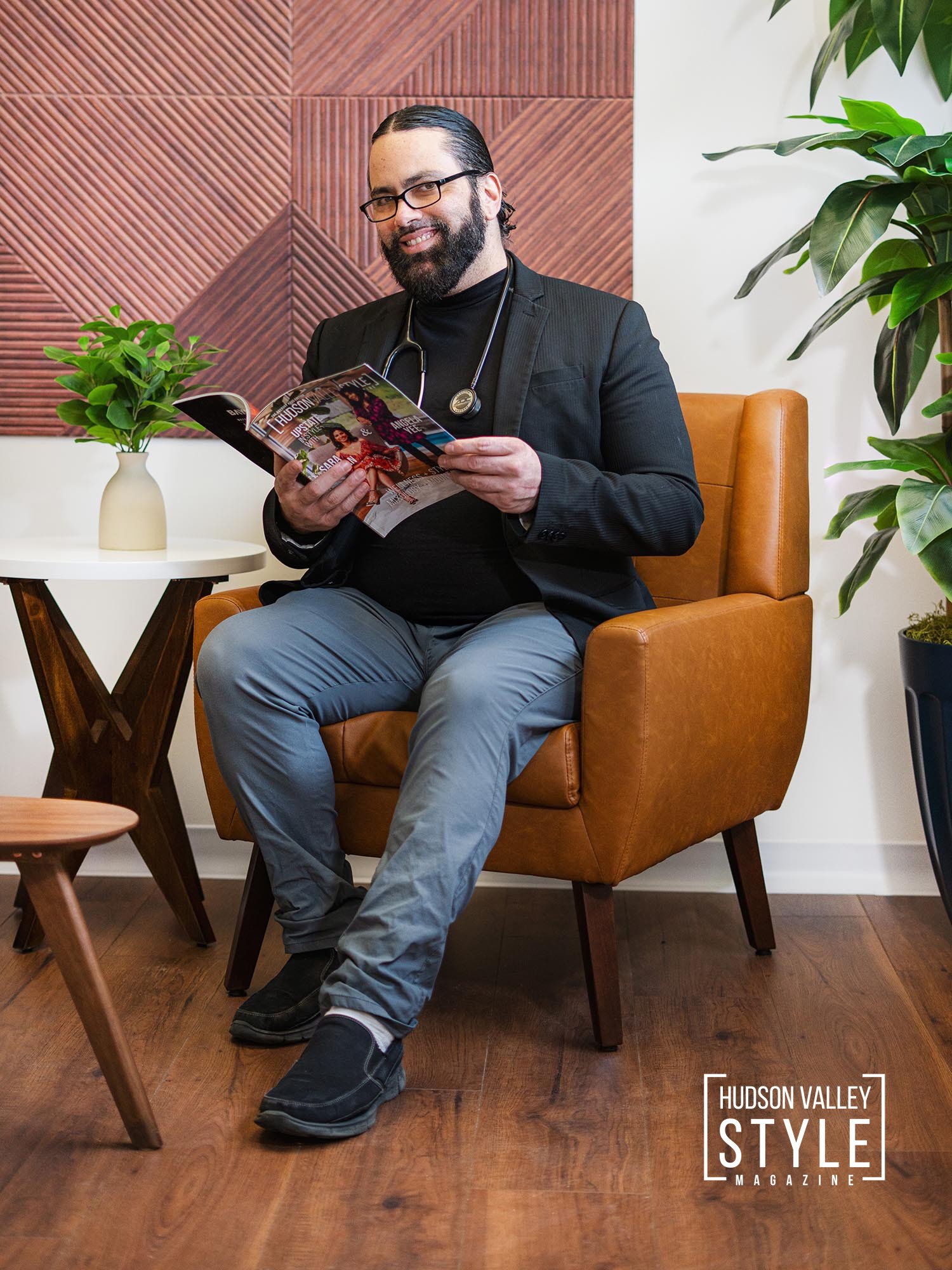

The Hudson Valley has long symbolized creativity, culture, and the slow-living ideal so many people crave. Yet beneath the region’s beauty lies a deepening crisis that mirrors a nationwide trend: chronic depression, persistent loneliness, and a dramatic collapse in real-world social life, especially among younger adults.
The Silent Epidemic: Chronic Depression, Loneliness, and the Collapse of Social Life in the Hudson Valley – by Maxwell Alexander, Mental Health Advocate, MA(FIT)/BFA(SVA), Artist, Certified Fitness Trainer, Bodybuilding and Sports Nutrition Coach – Mental Health – Presented by Alary Health Spa

A 2025 data summary from Our World in Data reveals the clearest indicator of the shift. Americans aged 15–29 now spend about 45% more time alone than they did a decade ago. The number is staggering in isolation, but even more devastating when placed inside the larger pattern that Google’s behavioral synthesis calls a national “social recession.” Young people today spend less time with friends, attend fewer gatherings, and participate in dramatically fewer parties — a decline of nearly 70% since the early 2000s. What used to be casual, instinctive social time has contracted into something rare, curated, or avoided altogether.

This quiet collapse of communal life exposes the cultural unraveling and mental-health crisis unfolding throughout suburbs and small towns. Remote work, endless feeds, algorithmic companionship, and the disappearance of shared third spaces have hollowed out the natural rhythm of human connection. The Hudson Valley, despite its creative reputation and natural beauty, sits squarely inside this transformation. Young adults arrive hoping to belong to something real, grounded, local — only to discover a landscape where isolation is the default and community requires more effort than anyone ever taught them to give. The digital world keeps them company, yet leaves them emotionally undernourished. And without regular in-person contact, the muscles of social life atrophy. What remains is a generation trying to build fulfillment on terrain that no longer supports it.

In the Hudson Valley, the shift is something you feel long before you ever try to name it. Younger residents—especially the newer transplants who arrived with big-city cultural fluency, advanced degrees, and the expectation of community—move through this landscape with a quiet ache. They didn’t come here to isolate; they came here to live better, slower, more honestly. Yet the suburban rhythm of the valley offers very little space for the spontaneous social life they were shaped by.

People keep to themselves. Doors stay closed. The intimacy of shared daily living that thrives in urban centers dissolves into long, unstructured evenings, endless commutes, and a silence that stretches into the bones. In this space, friendships don’t form naturally, and routines drift inward. What begins as a search for peace slowly becomes a life with very few points of contact. A different kind of loneliness takes hold—not dramatic or loud, but steady, ambient, and deeply human.

I’ve spent years navigating that quiet terrain myself. The nature photographs in this piece are part of the way I survive it—my own form of art therapy. Frozen cattails, splintered trunks, a cairn balanced against the sound of rushing water: these are the metaphors I return to when the world feels too interior. They mirror the emotional winters so many of us slip into here. Stillness, yes. Clarity, yes. But also the danger of becoming too self-contained.

Like the rotted wood along a frozen lake, solitude can look serene from the outside, yet it hollows from within. It offers escape from digital noise, but it also traps you in a place where real-life connection barely exists. Suburban culture doesn’t nurture community; it drifts around it. And for younger artists, thinkers, dreamers—those who came here hoping for a fuller, more connected life—that absence becomes the one thing no one warned them about.

The New Landscape of Loneliness in the Hudson Valley
Across Beacon, Poughkeepsie, Kingston, and the long drift of towns that thread the valley, you can sense a particular tension in the younger crowd — a subtle, ever-present unease that rises the moment social life demands anything real from them. Years of digital-first living have rewired the emotional circuitry that once made connection instinctive. Social media sells the fantasy of belonging while quietly stripping away the stamina required to sustain it. Even Australia’s recent move to remove these platforms from children’s lives speaks to the broader fear: unchecked digital immersion reshapes a person long before they ever understand what was taken from them.
The disappearance of informal gatherings, chance invitations, and effortless evenings among friends deepens the ache. What should feel natural — stepping into a room, recognizing a face, being folded into something communal — now arrives as a kind of emotional labor. The simple act of showing up becomes an internal negotiation. Loneliness begins to echo on itself. The longer someone drifts away from others, the more distant the possibility of return feels. It becomes a cycle of withdrawal masquerading as comfort, a quiet retreat that eventually hardens into a way of life.

Aláry Health Spa’s Mission: Rebuilding Human Connection
In this fragile landscape, Poughkeepsie’s Aláry Health Spa offers an intervention that feels urgently needed. Their bespoke mental health memberships are built for the social challenges of modern life, focusing not only on emotional regulation but on the real-world interpersonal skills that younger adults were never properly taught.

Instead of treating therapy as a last resort, Aláry reframes it as a foundation for living well. Sessions include strategies for managing social anxiety, building confidence, understanding emotional triggers, and re-entering community life with clarity and stability. The goal is simple: help people return to reality—not the simulated version lived through screens.

Through structured weekly sessions, clinical guidance, and behavior-focused tools, Aláry helps clients rebuild the capacity to participate in a social world that has become intimidating for many. This is mental health care designed not only to stabilize the individual but to reconnect them with the wider human world.

Restoring Social Life in a Region That Needs It
The Hudson Valley is at a turning point. As the national mental health crisis deepens, our local communities must confront the cultural consequences of prolonged isolation. Rebuilding social life is no longer optional. It is essential. Aláry Health Spa steps into this moment with a clear mission: support the mental clarity, emotional resilience, and social confidence needed to anchor people in reality again.

The future of the Hudson Valley depends on more than scenic landscapes and historic charm. It depends on people rediscovering the joy of connection, community, and belonging. With mental health memberships designed for a new era of loneliness, Aláry Health Spa is helping lead the way.
// Learn more and sign up for mental health membership at Alary Health Spa >>