There was a time when I was fully a New York City boy.
Not metaphorically. Literally. I studied at SVA, rode downtown trains at inappropriate hours, survived on caffeine and visual overstimulation, and once remade and starred in my own version of the Pet Shop Boys “New York City Boy” music video because apparently subtlety had never been one of my core personality traits.
Newburgh Waterfront: Photography, Memory, and the River That Built New York – by Maxwell Alexander, MA(FIT)/BFA(SVA), Artist/Activist/Photographer and Storyteller, EIC, Hudson Valley Style Magazine
At the time, New York felt infinite. Steel, nightlife, ambition, gay culture, art studios, scaffolding, deli coffee, fashion students pretending to understand postmodernism while carrying giant portfolios through Manhattan in February wind tunnels. The whole thing felt immortal.
Then the Hudson Valley happened to me.
Or maybe the river had been pulling me north the entire time.

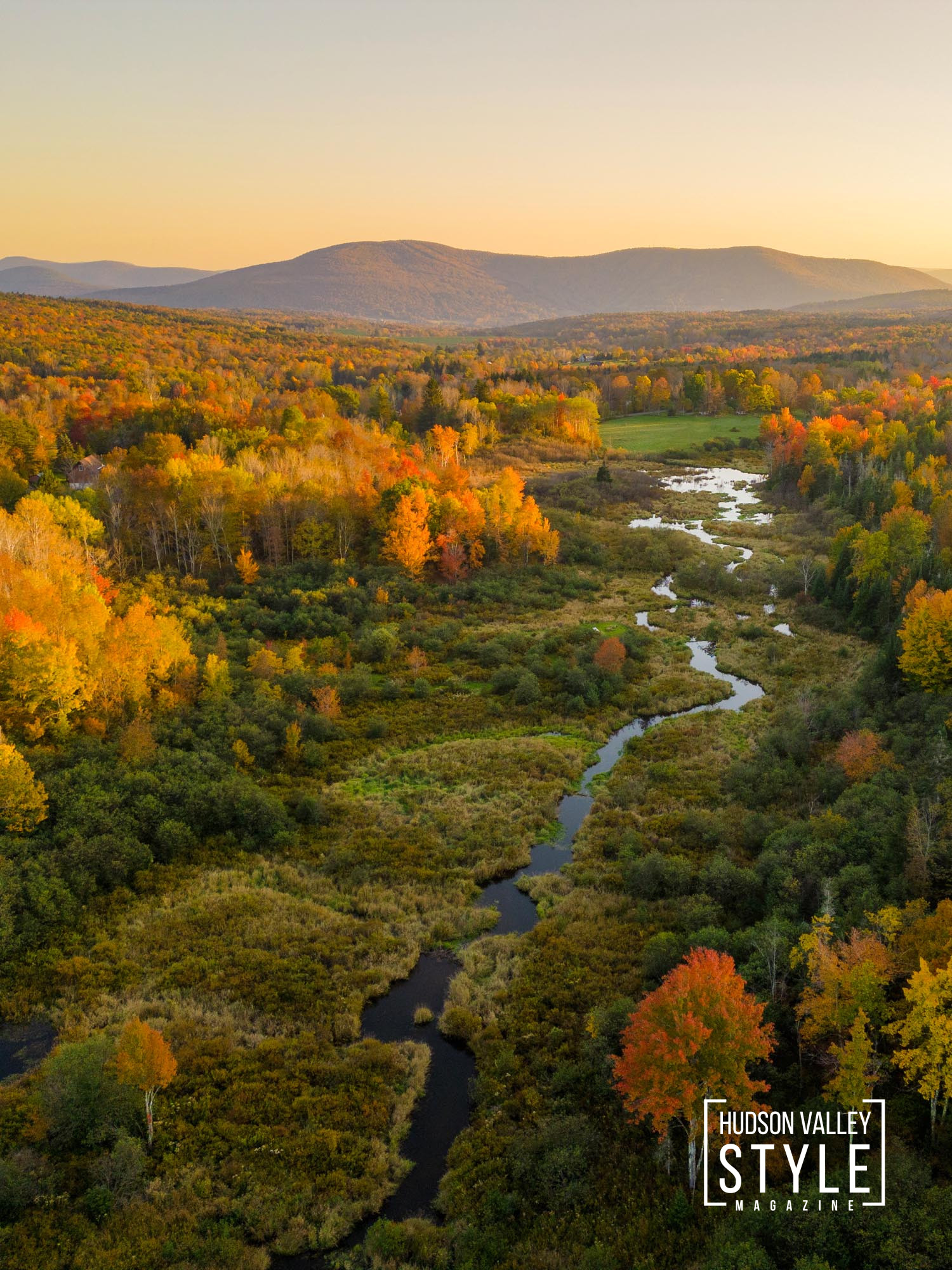
The strange thing about the Hudson Valley is that it quietly dismantles the artificial border between “Upstate” and New York City. People speak about them like separate worlds, but the reality feels almost biological. The Hudson River connects them into one living system. New York City drinks from this region. The economy flows through it. The rail lines pulse through it. The architecture, agriculture, weather systems, migration patterns, and even psychological rhythms of New York State move along the river like blood through an artery.
Without the Hudson River, New York City becomes a very different fantasy.
That realization slowly changed the way I photographed the region.
When I founded Hudson Valley Style Magazine, I thought I was building a lifestyle publication. Somewhere along the way, it evolved into something stranger: a visual chronicle of a region mutating in real time. I have photographed luxury cabins, modern rustic hotels, wellness retreats, old diners, river towns, fog rolling over mountain roads, gay cowboys in the woods, naked yoga in the mountains, brutalist spa interiors, forgotten industrial structures, railroad crossings, high fashion in the bushes, farmhouses, flooded creeks, cafés, storms, frozen rivers, architecture, tourists, forests reclaiming parking lots, intimate nature closeups and enough sunsets to medically qualify as a condition.
At this point, I genuinely suspect I may have photographed more of the Hudson Valley than almost anyone alive.
Not because I planned to become some official historian of the region. I just never stopped looking.
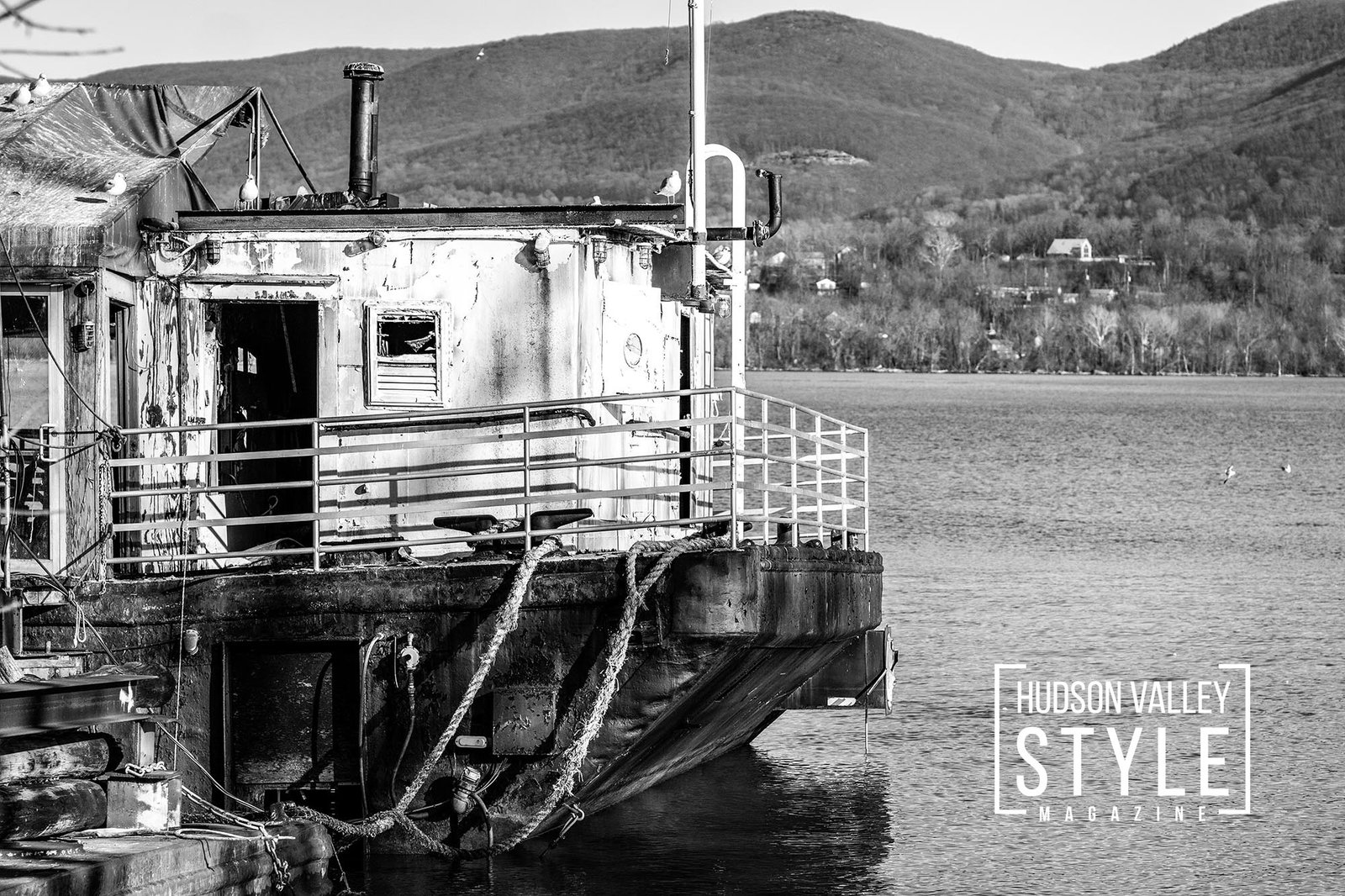
The photographs from the Newburgh waterfront, captured back in 2023, remain some of my favorite examples of what keeps pulling me toward the river. The images are filled with rusting structures, floating industrial relics, decaying machinery, graffiti-covered boats, geese drifting through contaminated-looking serenity, and mountains quietly observing humanity’s endless cycle of invention and collapse.
Very Hudson Valley, honestly.
What fascinates me about Newburgh is how nakedly it reveals the ongoing argument between the old world and the new one.

You can stand on the waterfront and watch nineteenth-century industrial infrastructure slowly dissolve while luxury development rises nearby. Wellness tourism arrives beside abandoned shipping equipment. Old factories become creative spaces. Historic buildings crumble while multimillion-dollar renovations appear a few blocks away. Bald eagles circle above cities that America once tried very hard to forget.
The Hudson Valley constantly performs this delicate dance between decay and reinvention.
And the river just keeps moving through all of it without commentary.
That’s probably why I keep photographing it.
The Hudson River possesses a scale that humbles every ideology humans attempt to impose onto it. Political eras come and go. Industries rise and collapse. Real estate trends mutate every six months. Tech founders arrive looking for “authenticity” while carrying oat milk and trauma from Brooklyn. Then winter comes, the mountains remain exactly where they were, and the river reflects the sky like none of it mattered quite as much as we thought.
Nature always wins the argument eventually.
My relationship with the Hudson Valley gradually stopped feeling like tourism and started feeling more like citizenship. Not in the legal sense. In the emotional sense. I began understanding the region less as a collection of destinations and more as a living archive of American transformation.
That transformation appears everywhere.
In Newburgh.
In Beacon.
In Kingston.
In Hudson.
In Poughkeepsie.
In Catskill.
In all the small river towns balancing preservation, development, memory, survival, beauty, and economic pressure simultaneously.
Some photographers chase spectacle. I became fascinated by transition itself.
A collapsing dock beside a pristine mountain range.
An abandoned barge beside migrating geese.
Graffiti painted onto obsolete machinery.
Luxury hospitality growing from post-industrial landscapes.
Nature reclaiming architecture while technology simultaneously expands deeper into the wilderness.
That contradiction became my subject.
People often ask me why I continue obsessively documenting the Hudson Valley through Hudson Valley Style Magazine and my fine art photography archive at Duncan Avenue Studios.
The answer feels embarrassingly simple.
Because this place matters.
The Hudson Valley remains one of the most historically important cultural landscapes in America, yet it still somehow feels underestimated. It shaped industry, transportation, civil rights, environmental movements, tourism, architecture, American painting, agriculture, rail travel, and the entire expansion of New York itself. The region continuously reinvents itself while carrying visible scars from every previous era directly on its surface.
I photograph those scars because they tell the truth.
Not the polished tourism version.
Not the nostalgia fantasy.
The real thing.
The river flows both ways here. Toward the future and toward memory at the same time.
Somewhere between those currents, I found my life’s work.