
Every host searches the same questions eventually. How do I get more bookings? Why did my ranking drop? What amenities actually matter? Here are the answers, straight from the people running a hospitality operation across the Hudson Valley and Catskills.
12 Questions Hudson Valley Airbnb Hosts Are Googling in 2026 — Answered by Alluvion Vacations – by HVSM Editorial Team – Hospitality – Vacation Rentals – Presented by Alluvion Vacations – Photography by Maxwell Alexander for Alluvion Media
We asked Dino Alexander and Maxwell Alexander, co-founders of Alluvion Vacations, to answer the questions Hudson Valley and Catskills hosts type into Google most often. Dino serves as Chief Technology Officer and Director of Hospitality, overseeing property operations, revenue strategy and the technology platform his team built to run Alluvion’s People’s Hospitality Network. Maxwell serves as Chief Marketing Officer, an artist and experiential-design expert with an M.A. from FIT, leading brand strategy, photography, editorial storytelling and PR.

1. How do I get more bookings on Airbnb?
Bookings follow visibility, and visibility follows performance. Airbnb’s search system weighs availability, response behavior, reservation acceptance, pricing, reviews and reliability together. “The listing is a living asset now,” Dino says. “It has to be maintained the way any performing marketing channel is maintained — photography, copy, amenities, pricing, all of it revisited on a schedule.” Hosts who set a listing once and leave it alone are competing against hosts who touch theirs weekly.

2. Why did my Airbnb ranking drop?
Usually it traces back to one of the same few signals: a stale calendar, slower response times, a pricing strategy that stopped adjusting to demand, or amenity fields left incomplete. Airbnb has said directly that availability, responsiveness and cited amenities all factor into how a listing surfaces in search. “Ranking is a reflection of operational health,” Dino explains. “When something drops, we treat it as diagnostic information, not bad luck.”

3. How do I get my first five-star review?
Build the experience the review will describe. “By the time a guest opens that review form, we’ve already had dozens of chances to earn five stars,” Dino says — accurate expectations at booking, smooth check-in, spotless housekeeping, fast resolution if anything goes wrong. Alluvion coordinates inspections, professional cleaning and concierge support around every stay for that reason.

4. What amenities actually help my listing get found?
Amenities function as search filters guests actively use, so complete and accurate fields matter as much as the amenities themselves. Beyond that, Maxwell frames amenity strategy around intention. “Wellness hospitality is designed around sleep, light, movement, nature and ritual,” he says. “A sauna or cold plunge earns its place when it improves how a guest restores themselves, not because a list said to add it.”

5. How do I price my Airbnb for 2026?
Dynamically, and continuously. “A Saturday during peak foliage and a Tuesday in February are two different products,” Dino says. Alluvion runs revenue management informed by seasonality, local demand, competitor rates and real booking behavior, alongside minimum-stay strategy and multi-platform distribution. Airbnb’s own newer pricing insights tools reflect the same shift — recommendations now respond to hyperlocal search and booking activity, updated far more often than a host checking in once a season.

6. How do I make my Airbnb stand out from similar listings nearby?
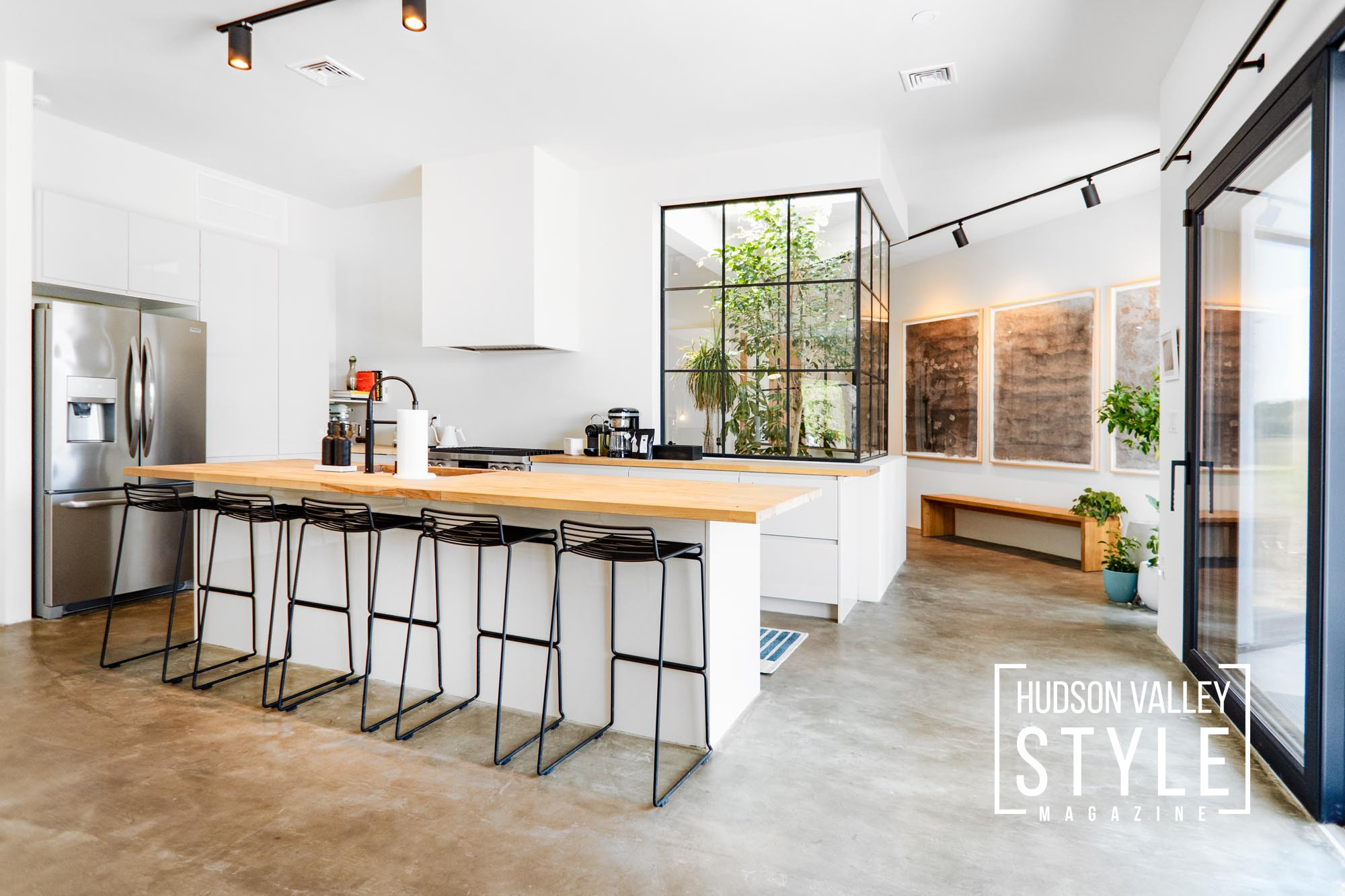
Give the property a story before giving it a filter. A farmhouse becomes a culinary gathering place. A creekside cottage becomes a romantic retreat. “Every property already has a narrative,” Maxwell says. “The work is discovering it and expressing it through photography, design and language, consistently, at every touchpoint a guest encounters.”

7. Does professional photography really affect bookings?
Airbnb has said photography quality can influence prominence directly. Maxwell describes the deeper mechanism: “A guest experiences a property before arrival. Photography is that first encounter.” The strategy moves beyond a wide-angle shot of each room, toward a sequence — hero image, lifestyle image, bedroom, amenity, outdoors, detail — built to communicate how a stay will feel rather than confirm a bed exists.

8. Should I market my Airbnb outside the platform?
Search captures demand that already exists. Editorial storytelling can create demand before a traveler has chosen a destination at all. Through Alluvion Media and editorial partners including Hudson Valley Style Magazine, properties get positioned inside conversations around design, wellness, food and regional culture — a pathway to discovery that runs parallel to, rather than dependent on, one platform’s algorithm.

9. Can local artists, farms or wellness practitioners really help my listing?
This is the center of what Alluvion calls People’s Hospitality. A next-door ceramicist’s bowls in the kitchen. A local artist’s work on the walls. A wellness practitioner from New Paltz leading a ritual before checkout. “A rental becomes a small cultural platform,” Maxwell says. Homeowners gain a distinctive property, artists and makers gain exposure, and travelers get an experience genuinely rooted in the place they’ve come to visit.

10. How do longer stays and remote work change what my Airbnb needs?
Stay-length data shows month-plus and extended bookings have remained more common since the pandemic than they were before it. That shifts what a property needs to compete: genuinely fast internet, a real workspace, laundry access, a kitchen someone can actually cook in for a week. Comfort infrastructure now carries revenue weight beyond its role as a nice-to-have.

11. Should I automate my Airbnb guest communication?
Use automation for repetition and reserve people for judgment. Alluvion’s booking and communication tools run on software Dino’s team built specifically to operate the People’s Hospitality Network — connecting the operations team, contractors, housekeeping crews and homeowners in one system. “Automation handles the repetitive layer,” Dino says. “That frees our people to spend their energy where genuine hospitality actually happens.” Host communities are already pushing back against messaging that reads as robotic, even while welcoming AI for pricing and operations — a distinction worth holding onto.

12. Is professional Airbnb management worth it?
Owning a beautiful property and running a professional hospitality business draw on different disciplines, and every piece of the operation touches another. Design affects photography. Photography affects attention. Pricing affects bookings. Housekeeping affects reviews. Reviews affect future rankings. “The future of property management is integrated,” Dino says. “Hospitality, revenue strategy and technology need to communicate with each other — that’s why we built our own infrastructure rather than treating technology as another piece of software bolted on.”

The House Provides the Setting. The Experience Is the Product.
Twelve questions, one answer underneath all of them: a stay guests remember gets built on purpose, across dozens of small decisions, long before a review ever gets typed.
“The guest staying in one of our homes is participating in a local economy,” Dino says. “Every great stay creates opportunity for the people who made it possible.”
Maxwell puts the philosophy simply: “It’s the artist whose work is on the wall, the farmer whose food is on the table, the housekeeper who prepared the home, the practitioner who led the ritual, and the homeowner who opened the door to all of it.”
That’s People’s Hospitality — already shaping how the Hudson Valley and Catskills welcome travelers in 2026.

How do I navigate local short-term rental regulations and permits in the Hudson Valley and Catskills?
The regulatory landscape across Upstate New York is hyper-local and constantly evolving. “Compliance isn’t a one-time check box — it’s the foundation of long-term asset value,” Dino explains. Towns like Woodstock, Saugerties, Kingston, and the City of Hudson each enforce distinct permit caps, primary-residence requirements, safety inspection protocols, and local lodging tax obligations. A compliant operation secures guest trust, protects against costly code violations, and ensures your property remains operational through changing local legislation. Working with an integrated local operator guarantees that zoning checks, fire code requirements, occupancy limits, and county tax filings are handled proactively.
About Alluvion Vacations
Alluvion Vacations is a premier, full-service vacation rental management company and short-term rental operator serving the Hudson Valley and Catskills. Founded by CTO Dino Alexander and CMO Maxwell Alexander, Alluvion combines dynamic revenue management, custom software infrastructure, elevated experiential interior design, and editorial storytelling to turn properties into high-performing hospitality brands. At the heart of their business is People’s Hospitality—a community-driven movement that connects local artisans, wellness practitioners, craftspeople, and homeowners to create authentic, guest-loved retreats across Upstate New York. To learn more about full-service management or book a stay directly, visit alluvionvacations.com.