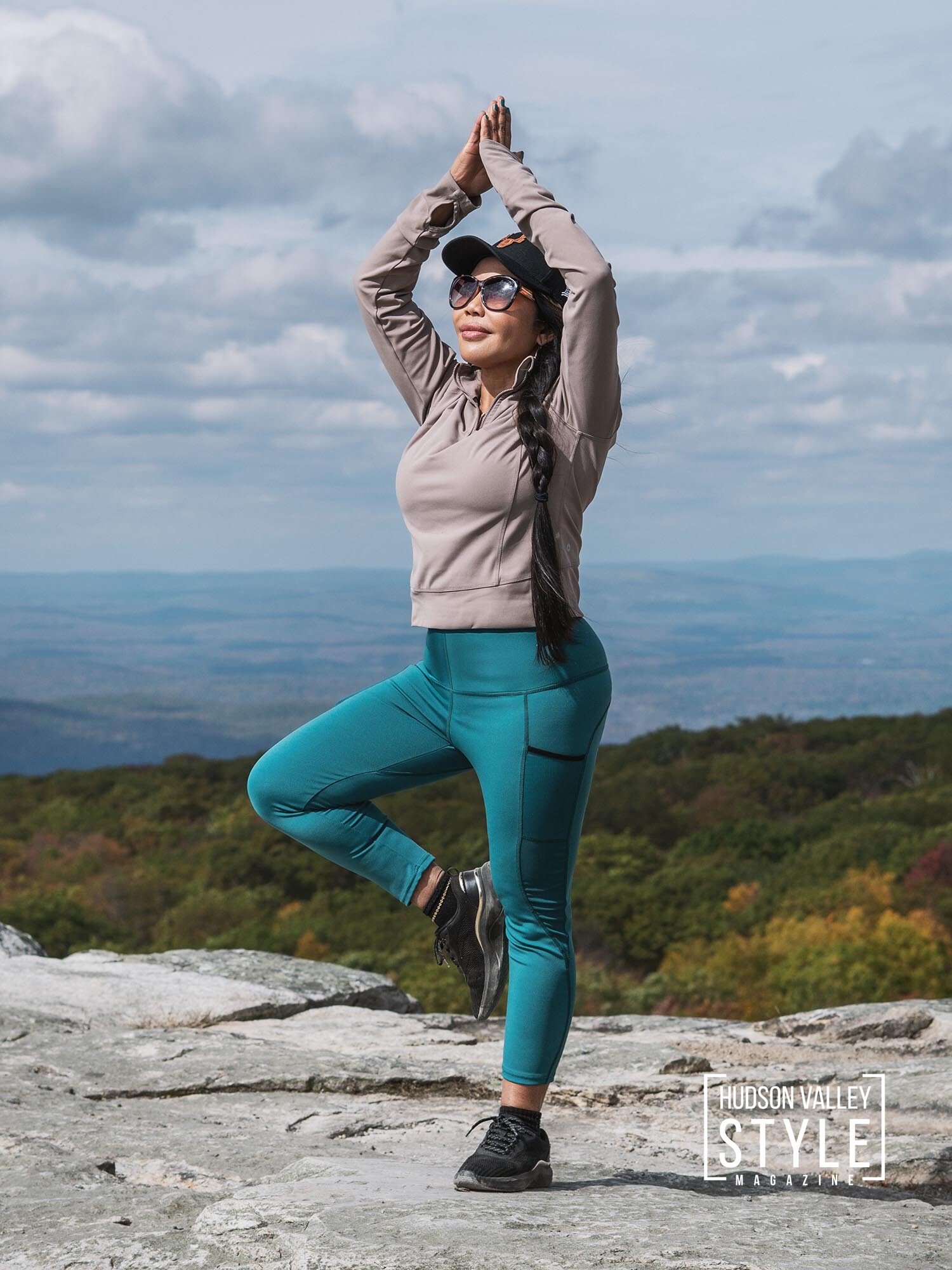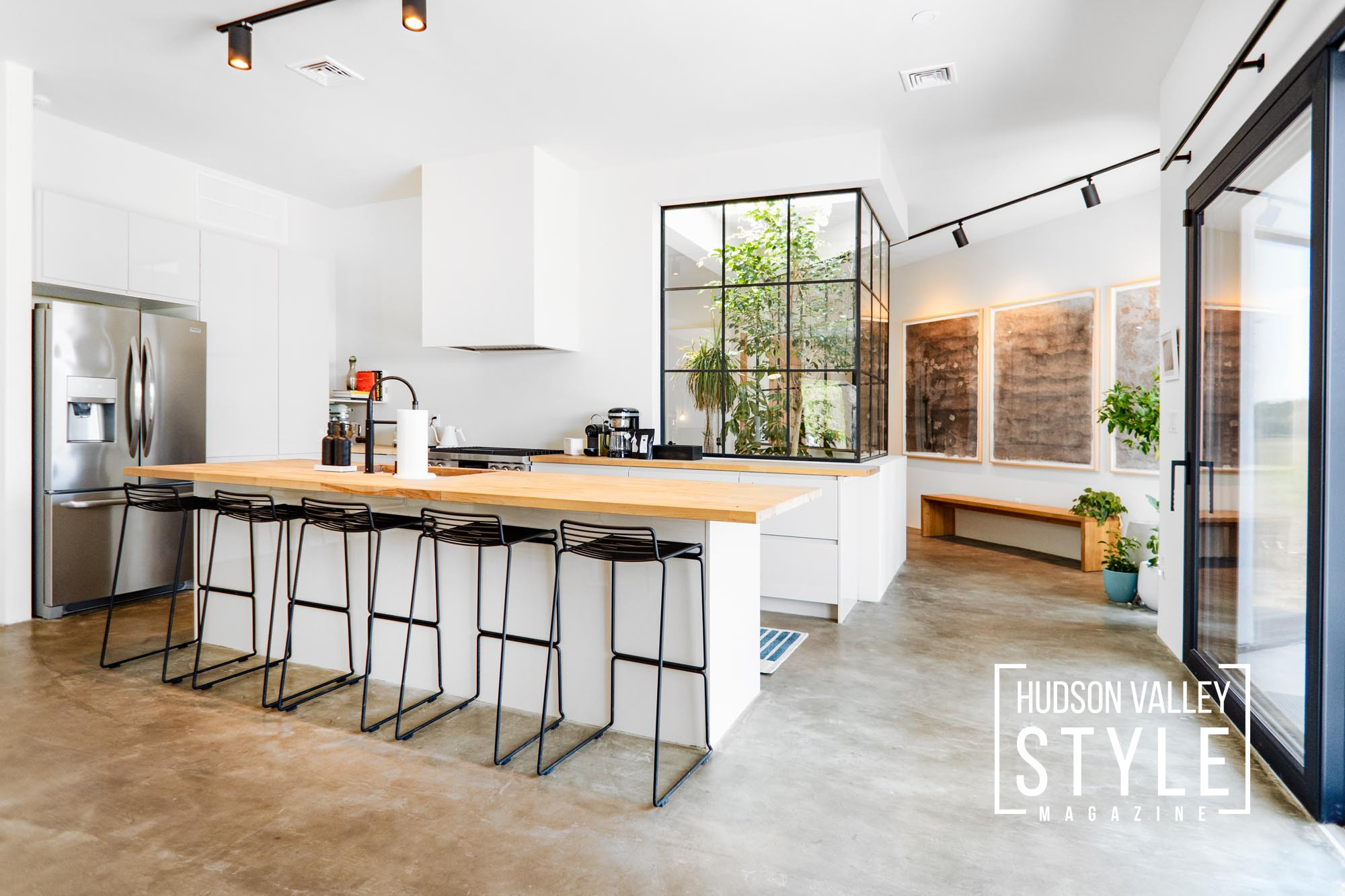

Grounded in environmental psychology, design theory, and visual culture, this inquiry establishes the emerging framework of Experiential Hospitality through a practice-based, visual study of landscape architecture, art objects, and guest autonomy. Serving as both researcher and fine art photographer, author Maxwell Alexander utilizes narrative photography as primary empirical documentation to evaluate theoretical concepts in real time. The visual study operationalizes Japanese garden design principles, Fred B. Bryant’s theories of savoring, Brenda Cowan’s Psychotherapeutic Object Dynamics, and Shoshana Zuboff’s critique of surveillance capitalism. By documenting how camera angles, light, spatial composition, and movement alter object perception, the study demonstrates how physical environments regulate human attention and emotional decompression. Moving past conventional, program-heavy “wellness travel,” this visual story provides qualitative proof that the deliberate subtraction of social surveillance and the addition of artistic framing foster genuine psychological restoration and cognitive agency.
Experiential Hospitality: Rethinking Wellness Travel Through Art, Nature, and Privacy – Experiential Hospitality 101 with Maxwell Alexander, MA(FIT)/BFA(SVA) – Photography by Maxwell Alexander for Alluvion Media – Presented by Alluvion Vacations

A Garden Near Cold Spring
Near Cold Spring, New York, surrounded by the Hudson Highlands, a remarkable designer lake house sits within a garden where architecture gradually gives way to landscape. Sculptural evergreens rise among hostas and hydrangeas, Japanese maples introduce flashes of saturated red, stone forms emerge through flowers and grasses, and the garden eventually opens toward a lake framed by mountains and mature woodland.
What makes the place compelling extends beyond beauty. Moving through the garden changes the scale and direction of attention. A tree becomes the entire visual field before the lake suddenly appears behind it. Flowers pull the eye toward color and texture; stone introduces weight, age and permanence; water expands everything again toward reflection, distance and sky.
The result raises a larger question at the center of experiential hospitality: what happens psychologically when landscape, art, beauty and privacy are designed as parts of the hospitality experience rather than treated as scenery surrounding it?

The Japanese Garden as an Architecture of Attention
Japanese garden traditions have developed sophisticated relationships among stone, water, vegetation, pathways, asymmetry, scale, borrowed scenery and framed views over many centuries. These elements do more than create visual beauty. Together, they influence movement, perception and attention.
Stone can evoke mountains, islands, permanence, age and geological time. Stone lanterns introduce sculptural and cultural meaning. Vegetation expresses seasonality and change, while paths influence pace and perspective. Water introduces reflection, movement and visual depth. A garden becomes less an image to consume than an environment to encounter.

Positive psychology offers useful contemporary language for some of these experiences. Savoring describes our capacity to notice, attend to and extend positive experiences, a concept developed extensively by psychologist Fred B. Bryant. Awe can emerge through encounters with beauty, complexity or vastness that expand our ordinary frame of reference, and contemporary research has increasingly examined its relationship with psychological and physical wellbeing.
The brilliance of the garden is that none of this needs to become an assignment. There is no mindfulness schedule and no prescribed journey toward enlightenment. Mercifully, nobody has installed a QR code beside the Japanese maple explaining how to appreciate it.
Attention simply has somewhere better to go.

Art, Objects and the Therapeutic Possibilities of Looking
The stone sculptures throughout the garden add another dimension because art changes the psychological relationship between observer and landscape. Stone encountered as geology and stone encountered as sculpture may consist of identical material, yet the human response can be remarkably different. We begin examining form, texture, placement, scale and symbolism. We move around an object, discover another angle, make associations and become curious about its presence.

That physical movement matters. A sculpture in a garden rarely presents one authoritative view. Approach it from the path and it has one relationship with the landscape; circle it and suddenly flowers appear behind it; move farther away and its scale changes against the trees. An opening through stone can become a frame for vegetation, light or water, transforming the landscape beyond it into part of the object experience. The sculpture remains physically stationary while perception keeps changing around it.

Brenda Cowan, who was dean of my graduate department at FIT and an extraordinary teacher, developed Psychotherapeutic Object Dynamics to examine relationships among people, objects, meaning and wellbeing. Together with Ross Laird and Jason McKeown, she expanded this research in Museum Objects, Health and Healing: The Relationship Between Exhibitions and Wellness, an interdisciplinary exploration of objects, psychological wellbeing, exhibitions and therapeutic practice.
One observation from their work feels particularly relevant here: “Observation itself is an active state.”

That idea travels particularly well beyond museum walls. Art does not need to explain itself to engage us psychologically. An object can become a focal point for curiosity, memory, imagination and contemplation. Within a garden, those encounters become multisensory as stone interacts with vegetation, water, sunlight, weather and the movement of the observer.
Ross Laird’s writing on creativity and healing extends this relationship between objects, imagination and inner experience. His work examines creative practices and objects as pathways through which people can explore meaning, emotion and personal experience. Laird’s clinical and educational perspective adds a particularly useful dimension here: our engagement with objects can involve far more than aesthetic appreciation. Objects can become prompts for imagination, association and reflection.

Jason McKeown’s contribution to the interdisciplinary work brings additional therapeutic context, including the relationship between object engagement and wilderness-based therapeutic practice. Cowan’s original Psychotherapeutic Object Dynamics research itself emerged in connection with field research conducted in a wilderness therapeutic setting in North Carolina, making the movement of these ideas from museum objects back into landscape especially compelling.

Cultural engagement adds another layer. Japanese garden traditions invite encounters with ways of thinking about nature, impermanence, contemplation and beauty that have developed across generations. Experiencing another cultural language through art and landscape can expand perspective without requiring the experience to become didactic.
The garden becomes an exhibition without walls, labels or the minor social panic of wondering whether one has wandered too close to something priceless.

The Body Is Part of the Experience
We do not experience environments as brains floating conveniently above the landscape. We arrive with bodies.
Light, temperature, scent, texture, sound and movement participate in turning place into experience. Gravel changes the rhythm of walking. Shade changes temperature against the skin. Flowers invite proximity. A path establishes direction without issuing instructions. Water creates depth and reflection, while the placement of a bench or chair changes posture, orientation and the amount of time a person remains somewhere.

This is where wellness and experiential design begin to overlap in ways that are far more interesting than simply adding a yoga mat to a bedroom and declaring the property a wellness retreat. Wellness can begin much earlier, with the sensory and spatial conditions of the environment itself.
A garden can provide opportunities for movement, fascination, contemplation, connection with nature, cultural engagement and moments of awe. Research in psychology has increasingly examined awe as a pathway connecting encounters with nature, art and vastness with dimensions of mental and physical wellbeing.
None of these experiences needs to be prescribed. Good design simply makes them more available.
Sometimes sophisticated wellness design begins with an extraordinarily simple question: Where will someone naturally want to sit?

Privacy as a Wellness Experience
Wellness travel is often defined by what a destination provides: spa treatments, meditation, fitness programs, nutritional menus and increasingly elaborate rituals of restoration. Yet there is another dimension of wellness hospitality that receives far less attention because, paradoxically, it involves providing less. Privacy itself can become part of the therapeutic experience.

Traditional hotels and resorts are institutional forms of hospitality, even at their most luxurious. They require people to operate them, and those people inevitably become part of the guest experience. There are arrivals and departures, reception desks and concierges, housekeeping schedules and restaurant reservations, luggage assistance and turndown service. At the highest end of the market, there may be attendants, private butlers and an impressive choreography of people dedicated to anticipating what a guest might need next.
That model can be wonderful when service is what the traveler desires. Restoration, however, can require something entirely different: the freedom to need absolutely nothing from another person.

A private residence creates the possibility for a fundamentally different psychological experience. Once the door closes, there may be no staff circulating through the environment, no strangers sharing the garden, no server approaching the table and no beautifully trained human materializing at precisely the moment when you have finally forgotten that other humans exist. The absence of service becomes a form of autonomy. You decide when to eat, when to wander outside, when to sit beside the water, when to speak and when an afternoon requires no agenda whatsoever.
That autonomy becomes especially meaningful in a private garden. Public gardens and resort landscapes can offer extraordinary beauty, but they remain social environments. Here, the journey through the garden toward the lake can belong entirely to the guest. There is no audience and no hospitality staff maintaining a presence at the edge of the experience. The relationship becomes unusually direct: person, garden, art, water and time.

From the perspective of mental wellbeing, that distinction becomes fascinating. Privacy creates conditions for agency, solitude, reflection and psychological decompression. It removes the small social negotiations that accompany shared environments and allows attention to move without continually accounting for another person’s presence. For people whose everyday lives involve constant interaction, visibility and responsibility, the ability to temporarily withdraw from those demands can itself feel restorative.
This also complicates our conventional definition of luxury hospitality. Luxury has historically been associated with an abundance of service: someone carries the luggage, pours the wine, turns down the bed and appears with another towel before anyone has discovered that a towel was required. Experiential hospitality allows us to ask a different question: What if the ultimate luxury, in the right setting, is being completely left alone?
No butler required.

Two Chairs Change Everything
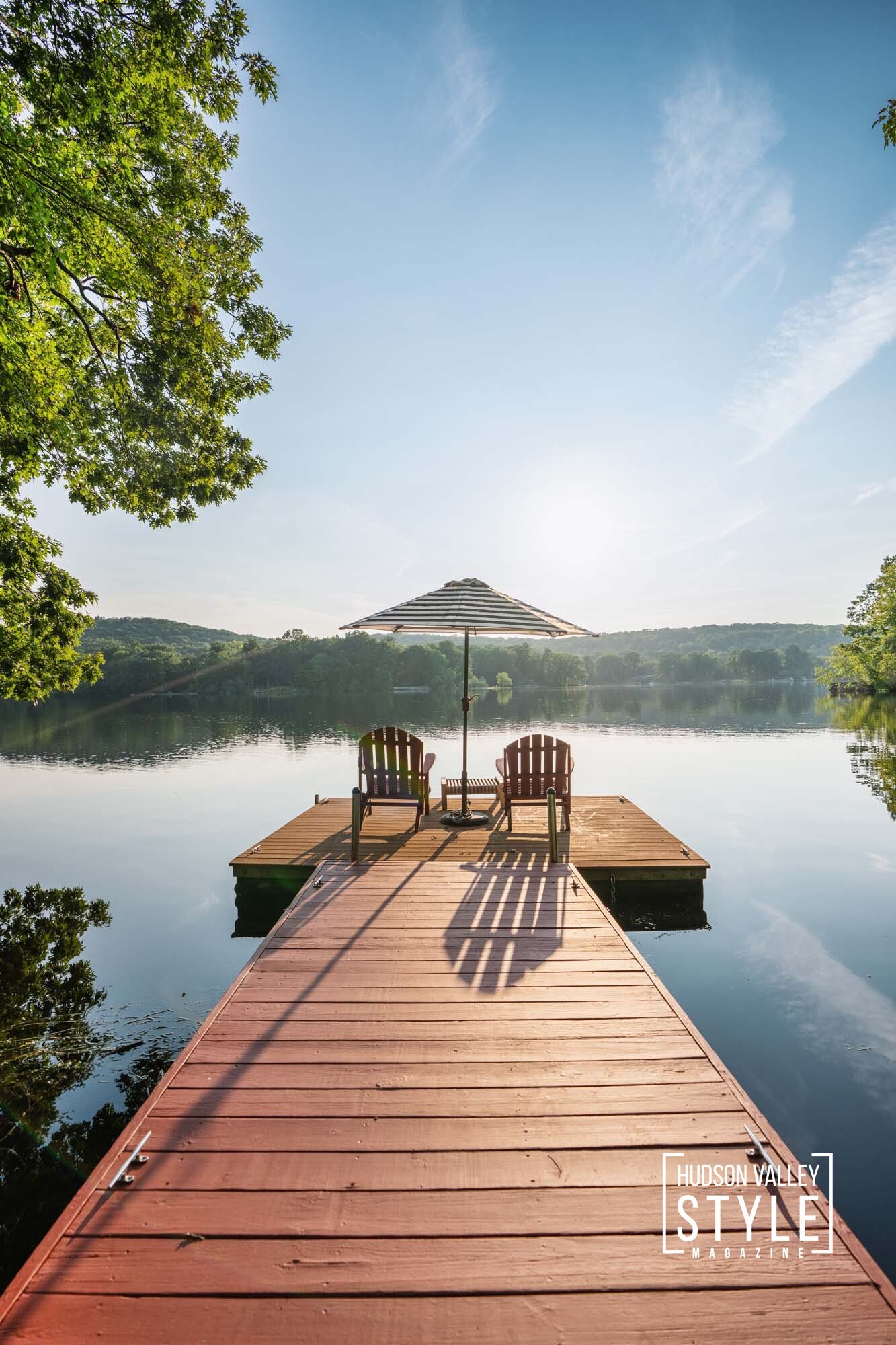
The distinction becomes particularly visible when the garden reaches the lake. At the end of a private dock, two Adirondack chairs face the water and surrounding mountains.
Two chairs create a fundamentally different psychological proposition from twenty. There is no audience, no social choreography and no need to negotiate the experience with a crowd. One person can sit alone, or two people can share the landscape without sharing it with everyone else.
Compare that with even the most beautiful public garden or luxury resort. Both can provide extraordinary encounters with nature and design, yet both remain shared social environments. The presence of other people changes behavior, even subtly. Privacy removes that layer and restores greater agency over movement, attention and time.
Nobody prepares the chairs. Nobody asks whether another drink would improve the sunset. Nobody checks whether everything has met expectations at precisely the moment when expectations have finally disappeared.
The guest simply sits.

The Luxury of Being Unobserved
Privacy carries even greater psychological weight in a culture where unobserved time has become increasingly scarce. Public life brings crowds, cameras and social expectations, while digital life adds continuous measurement, behavioral tracking and demands on attention.
Shoshana Zuboff’s concept of surveillance capitalism provides an economic and social framework for part of this phenomenon. Zuboff describes a system in which private human experience can be transformed into behavioral data used for prediction and commercial purposes, raising larger questions about autonomy and human agency.
Against that environment, a private garden can represent something surprisingly radical.

Nothing here requires engagement. The Japanese maple has no analytics dashboard. The stone lantern has shown no interest in purchasing behavior. The lake has yet to request permission to track activity across other lakes.
There is something psychologically generous about that absence.
For wellness travel, privacy may therefore represent more than an amenity. It creates the possibility of reclaiming agency over attention: deciding what enters consciousness, what remains outside it and how a period of time will be spent. The experience of being somewhere beautiful without being observed may itself be becoming a form of luxury.

Experiential Hospitality as a Field of Inquiry
Experiential hospitality offers a useful field of inquiry precisely because hospitality sits at the intersection of so many dimensions of human experience. Architecture creates spatial conditions; landscape shapes movement and sensory perception; objects carry cultural and personal meaning; service structures social interaction; technology mediates attention; privacy affects agency; and the body integrates all of these signals into an experience that may be remembered long after the details have disappeared.
This makes hospitality an unusually rich environment for studying the relationship between place and psychological wellbeing. The questions extend well beyond whether a room is attractive or a service interaction is successful. How does a landscape affect attention? What happens when art becomes part of the lived environment rather than an isolated cultural encounter? How does privacy alter our ability to savor an experience? Can fewer social interactions sometimes produce greater restoration? How do cultural traditions embedded in design invite curiosity and perspective-taking? Where does hospitality end and environmental psychology begin?

The object research of Brenda Cowan, Ross Laird and Jason McKeown offers one useful bridge between these worlds. Their interdisciplinary work examines the relationship between objects, health, healing and exhibition environments, while Cowan’s Psychotherapeutic Object Dynamics research proposes that human-object relationships can participate in wellbeing and psychological health.
A sculpture, garden path, window, chair, lake view or culturally meaningful object can therefore be understood not merely as a feature but as part of a larger experiential system. The interesting question becomes not simply what is here? but what kinds of human experiences does being here make possible?
That question leaves a great deal worth exploring.

Experiential Hospitality
Experiential hospitality begins with a deceptively simple proposition: hospitality shapes human experience.
Architecture and service remain part of that equation, but so do landscape, art, cultural engagement, sensory perception, privacy, autonomy, movement and attention. Wellness can emerge through what a destination provides, yet it can also emerge through what the environment allows to disappear.
This changes the logic of hospitality design. More does not automatically mean better. Another amenity, interaction or service touchpoint can add value, but subtraction can be equally sophisticated. Fewer interruptions can create greater autonomy. Fewer social obligations can create greater psychological space. Privacy can allow art and nature to be experienced with a depth that becomes difficult in a public environment.

None of this requires the guest to know the terminology. Positive psychology, Japanese garden traditions, Psychotherapeutic Object Dynamics and surveillance capitalism help us understand the mechanisms, but the experience itself can remain beautifully uncomplicated.
A private garden. Art among the trees. A path toward the lake. Two chairs facing the mountains.
Perhaps one of the most valuable things hospitality can offer now is not another experience competing for our attention, but a place where our attention belongs to us again.

About the Author
Maxwell Alexander, MA (FIT), BFA (SVA), is an author, artist, activist, photographer, fitness model, and wellness professional whose multidisciplinary practice explores the intersections of art, experiential design, positive psychology, hospitality, mental wellness, nature, technology, identity, and the human body.
Educated in Exhibition and Experience Design at the Fashion Institute of Technology and fine arts at the School of Visual Arts, Alexander approaches his creative and editorial work through practice-based research and embodied inquiry. The body is not simply represented in his work, but becomes one of the instruments through which ideas about identity, perception, environment, fitness, sexuality, and wellbeing are investigated.
Working as both photographer and fitness model within his own artistic practice, Alexander moves between observer and subject, using bodybuilding and physical training as forms of embodied practice alongside photography, writing, and visual art. His art is also a vehicle for LGBTQ+ rights activism, exploring representation, identity, visibility, body autonomy, and the psychological dimensions of self-expression. This work connects his artistic practice with broader questions of mental health and the therapeutic potential of creative expression, including the ways art can provide space for identity formation, emotional processing, self-knowledge, and human connection.
Alexander is a co-founder of Alary Health, a New York-based virtual healthcare platform providing mental health, medical wellness, and longevity therapies, with its flagship physical location, Alary Health Spa, in Poughkeepsie, New York. His work across healthcare and hospitality provides distinct environments for exploring a shared question: how physical, psychological, social, and environmental conditions can contribute to human wellbeing.
He is also co-founder and CMO of Alluvion Vacations, a Hudson Valley-based hospitality company focused on wellness travel and experiential stays, and a co-founder of the People’s Hospitality Movement, which explores hospitality as a reciprocal relationship among guests, hosts, communities, and place. The movement considers wellness travel not only through the wellbeing of the traveler, but through the economic health and cultural vitality of Upstate New York communities that make these experiences possible.
Through his ongoing Experiential Hospitality 101 series, Alexander brings these disciplines into conversation, using hospitality environments as case studies for exploring art, nature, positive psychology, privacy, autonomy, wellness, technology, culture, and design. Rather than understanding hospitality solely as accommodation or service, his inquiry asks a broader question: How can the places we create, inhabit, and share contribute to human wellbeing?
Sources & Further Reading
- Brenda Cowan, Ross Laird and Jason McKeown. Museum Objects, Health and Healing: The Relationship Between Exhibitions and Wellness. Routledge. An interdisciplinary examination of objects, exhibitions, psychological wellbeing and therapeutic practice.
Routledge – Publisher information - Brenda Cowan. A Theory of Psychotherapeutic Object Dynamics. Cowan developed the theory beginning in 2015 in connection with field research involving wilderness therapeutic practice and human-object relationships.
Psychotherapeutic Object Dynamics — Background and Origin - Brenda Cowan. Professor of Exhibition and Experience Design, Fashion Institute of Technology. FIT faculty biography and academic background.
Fashion Institute of Technology - Ross Laird. Writing and research on creativity, objects, psychotherapy and healing, including creative practice as a means of exploring human meaning and experience.
Ross Laird — Creativity - Jason McKeown. Co-author with Brenda Cowan and Ross Laird of Museum Objects, Health and Healing, contributing therapeutic and wilderness-based perspectives to the interdisciplinary study of human relationships with objects.
Routledge - Fred B. Bryant. “Current Progress and Future Directions for Theory and Research on Savoring.” Frontiers in Psychology, 2021. Bryant reviews savoring as a core concept within positive psychology involving attention to and regulation of positive experience.
PubMed - Maria Monroy and Dacher Keltner. “Awe as a Pathway to Mental and Physical Health.” Research review examining relationships among awe, experiences in nature and dimensions of psychological and physical wellbeing.
PubMed Central - Shoshana Zuboff. The Age of Surveillance Capitalism: The Fight for a Human Future at the New Frontier of Power. Zuboff’s scholarship examines behavioral data extraction, autonomy and the economic logic she defines as surveillance capitalism.
Harvard Gazette interview with Shoshana Zuboff