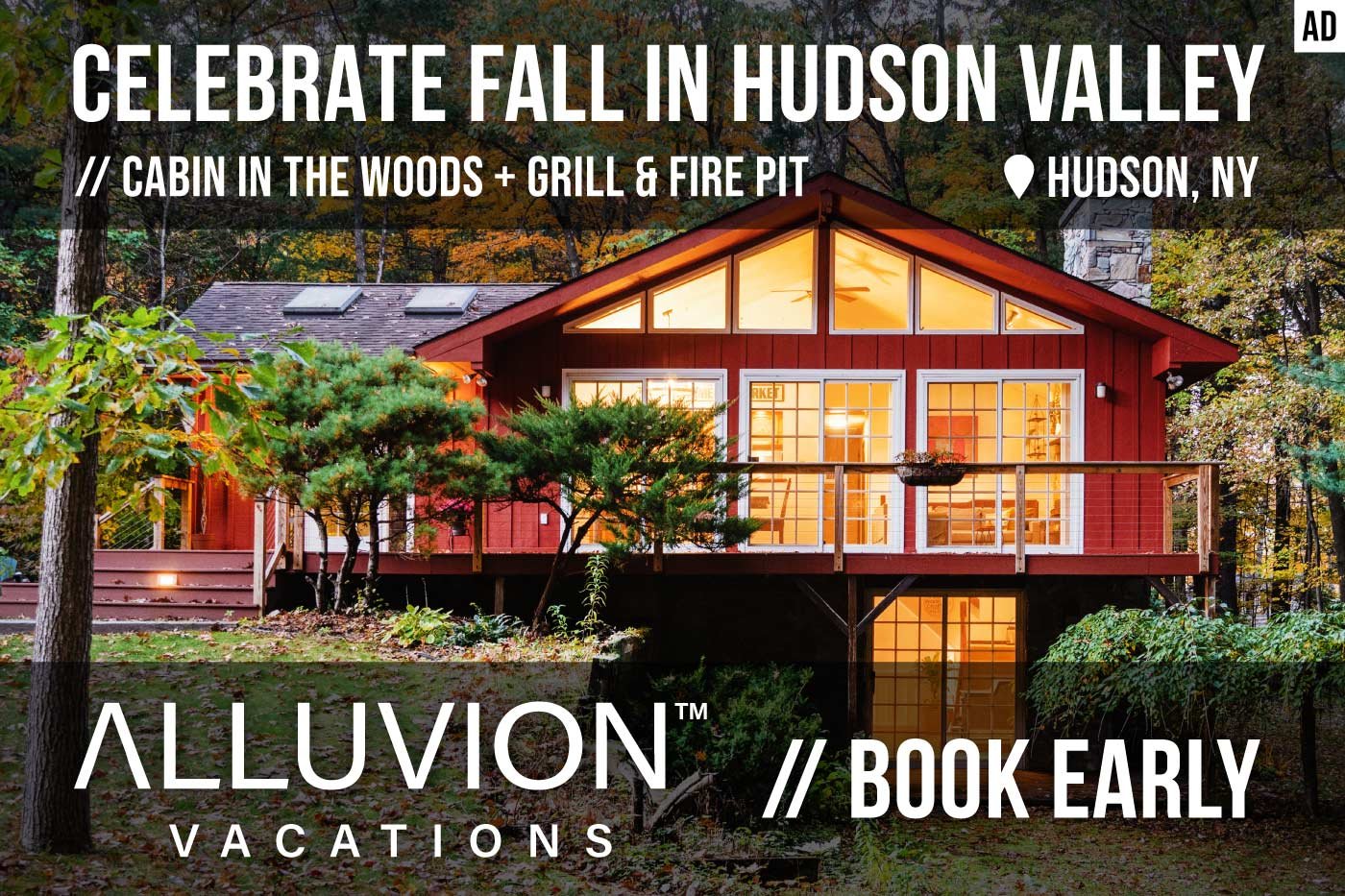
Travel in the Hudson Valley has entered a more interesting phase. A beautiful house, a dramatic view, and a respectable set of linens still matter, obviously, because civilization has standards. Yet the deeper luxury now is control over your own experience: when you arrive, how much interaction you want, what you drink, where you sit, how long you stare at the horizon, and whether another human being needs to appear anywhere in that sequence. At the Newburgh Ridgeline Retreat, experiential hospitality unfolds through privacy, landscape, design, and a distinctly Hudson Valley relationship with food, drink, and place.
Mindful Mixology and Total Privacy: How the Newburgh Ridgeline Retreat Redefines “Hushpitality” — Experiential Hospitality 101 with Maxwell Alexander, MA(FIT)/BFA(SVA) — Luxury Travel — Wellness Travel — LGBTQ+ Travel — Presented by Alluvion Vacations — Photography by Maxwell Alexander for Alluvion Media

Welcome to Hushpitality
Hospitality has traditionally been measured by visible service: greetings, desks, attendants, bellhops, concierges, and a cheerful procession of people asking whether everything is satisfactory. Lovely, when desired. Exhausting, when your fantasy weekend involves seeing approximately zero strangers before noon. “Hushpitality” offers another model, one built around frictionless arrival, contactless check-in, intuitive design, and the deeply underrated pleasure of being left alone.

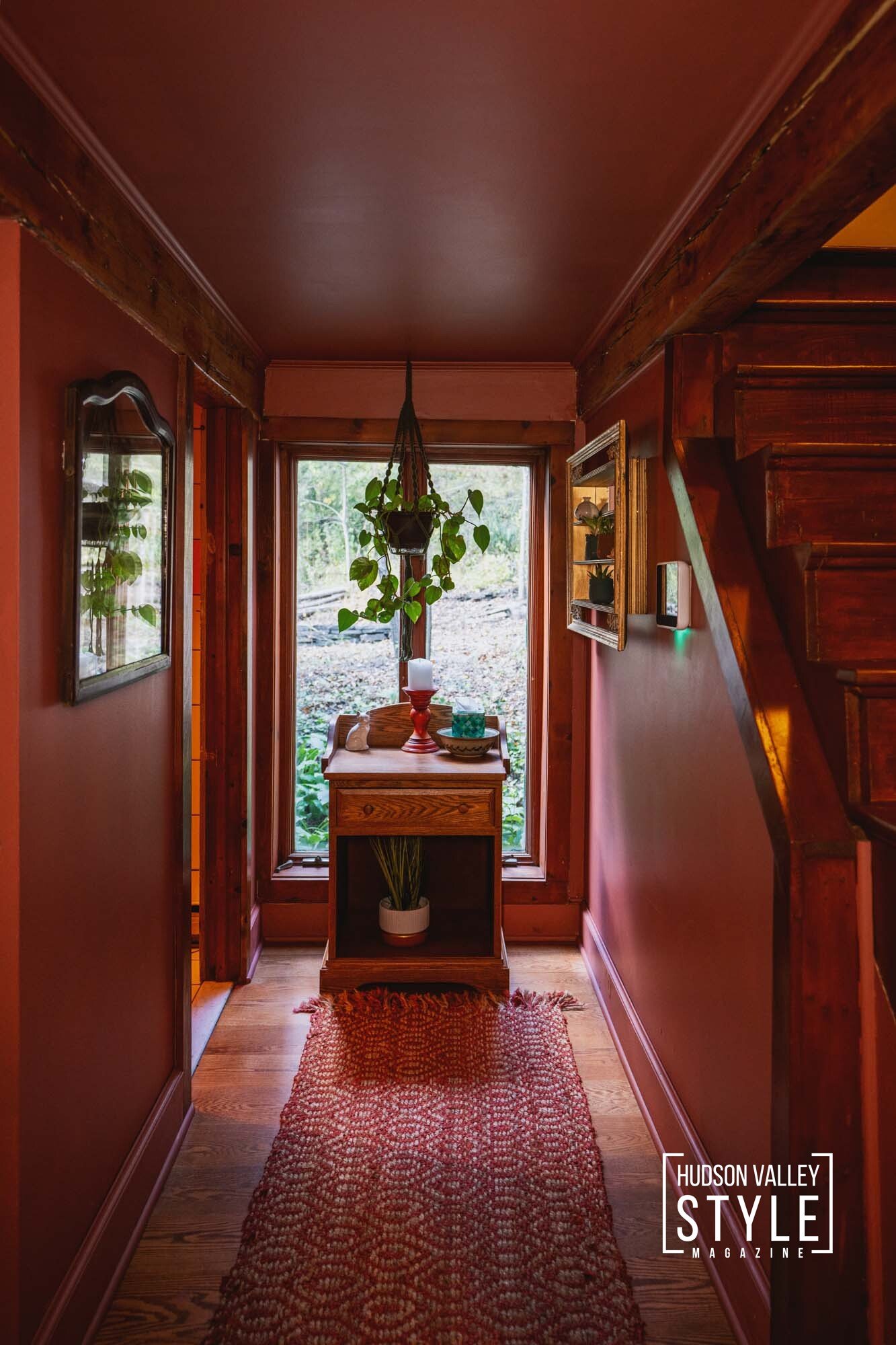
At this private Newburgh NY vacation rental, guests can arrive on their own terms and settle directly into the rhythm of the property. No lobby choreography. No compulsory social performance. No need to look presentable after three hours on the Taconic while emotionally recovering from whoever designed the merge lanes. Privacy becomes part of the architecture of the stay, allowing the nervous system to soften while the landscape does most of the talking.

Privacy Has Become a Luxury Amenity
Wellness travel often arrives dressed in robes, treatment menus, cucumber water, and an impressive vocabulary of things one may apparently do to a lymph node. Yet restoration can be much simpler. A private Hudson Valley sanctuary gives travelers room to regulate their own pace without interruption. Sleep late. Read outside. Take breakfast onto the deck. Practice yoga without an audience. Watch the light change over the ridge. Wear something glamorous, something ridiculous, or absolutely nothing suitable for public circulation.

For LGBTQ+ travelers especially, privacy can carry an additional emotional dimension. The ability to inhabit a space freely, without constantly evaluating how one is being perceived, can transform a weekend away into something far more restorative. Alluvion Vacations has explored that relationship between belonging, identity, and regional travel in its guide to LGBTQ+ travel in Upstate New York, where hospitality begins with the freedom to exist comfortably on your own terms.

Where Orchard Rows Meet Open Sky
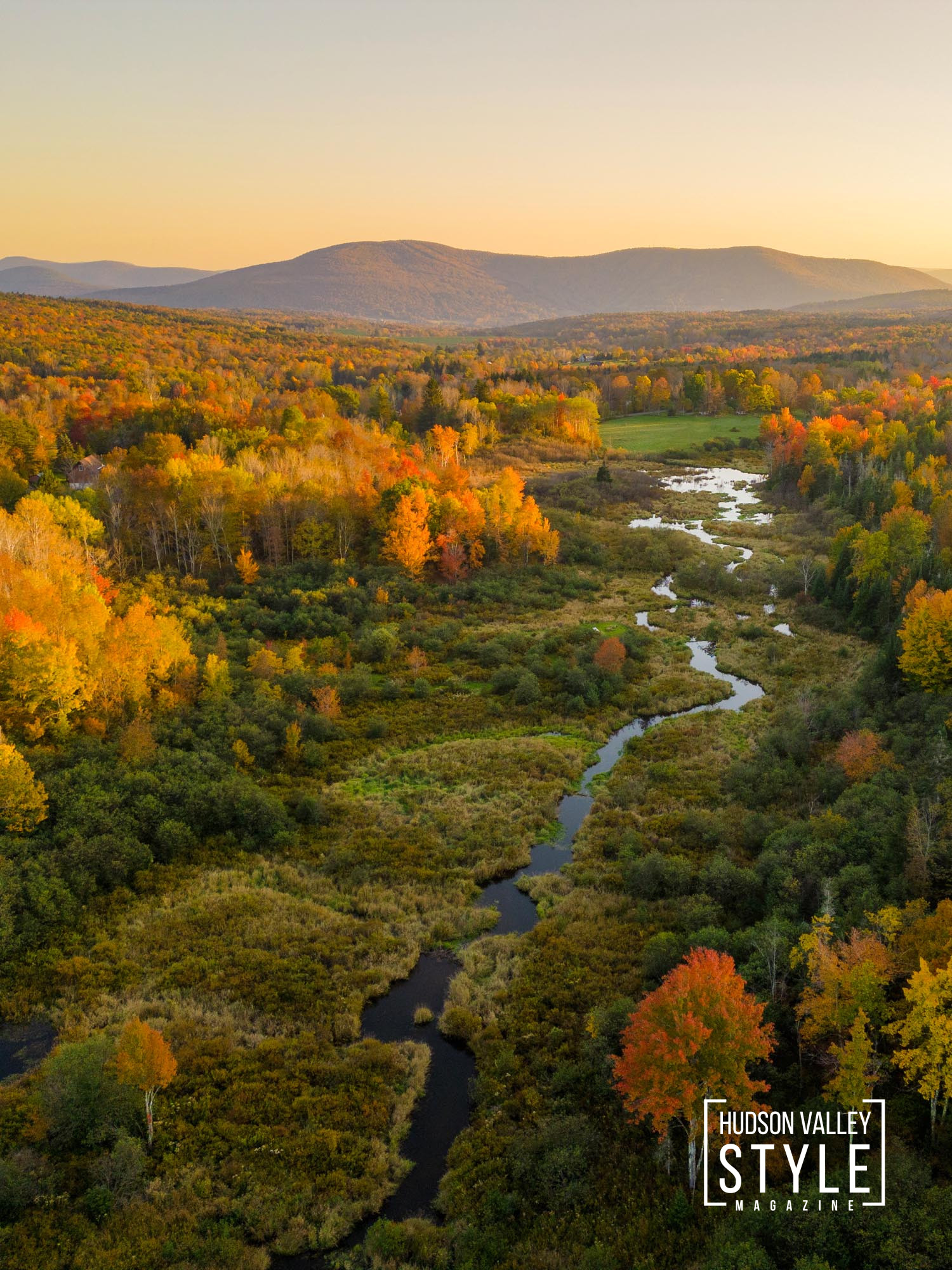
The setting gives the Newburgh Ridgeline Retreat its emotional vocabulary. Orchard country, rolling terrain, broad sky, and the agricultural character of Orange County create a landscape that feels distinctly connected to the Hudson Valley rather than imported from a generic luxury mood board. Views are part of the experience, yet so are proximity, scent, weather, seasonal color, and the agricultural traditions surrounding the property.

Experiential hospitality works best when a destination remains legible inside the stay. You should know where you are. Newburgh carries its own architecture, orchards, farms, wineries, cideries, distilleries, river history, and increasingly sophisticated hospitality culture. The retreat becomes a frame through which that larger regional identity can be experienced, ideally from a deck with a glass in hand and your phone temporarily demoted from executive management.

Mindful Mixology, Hudson Valley Style
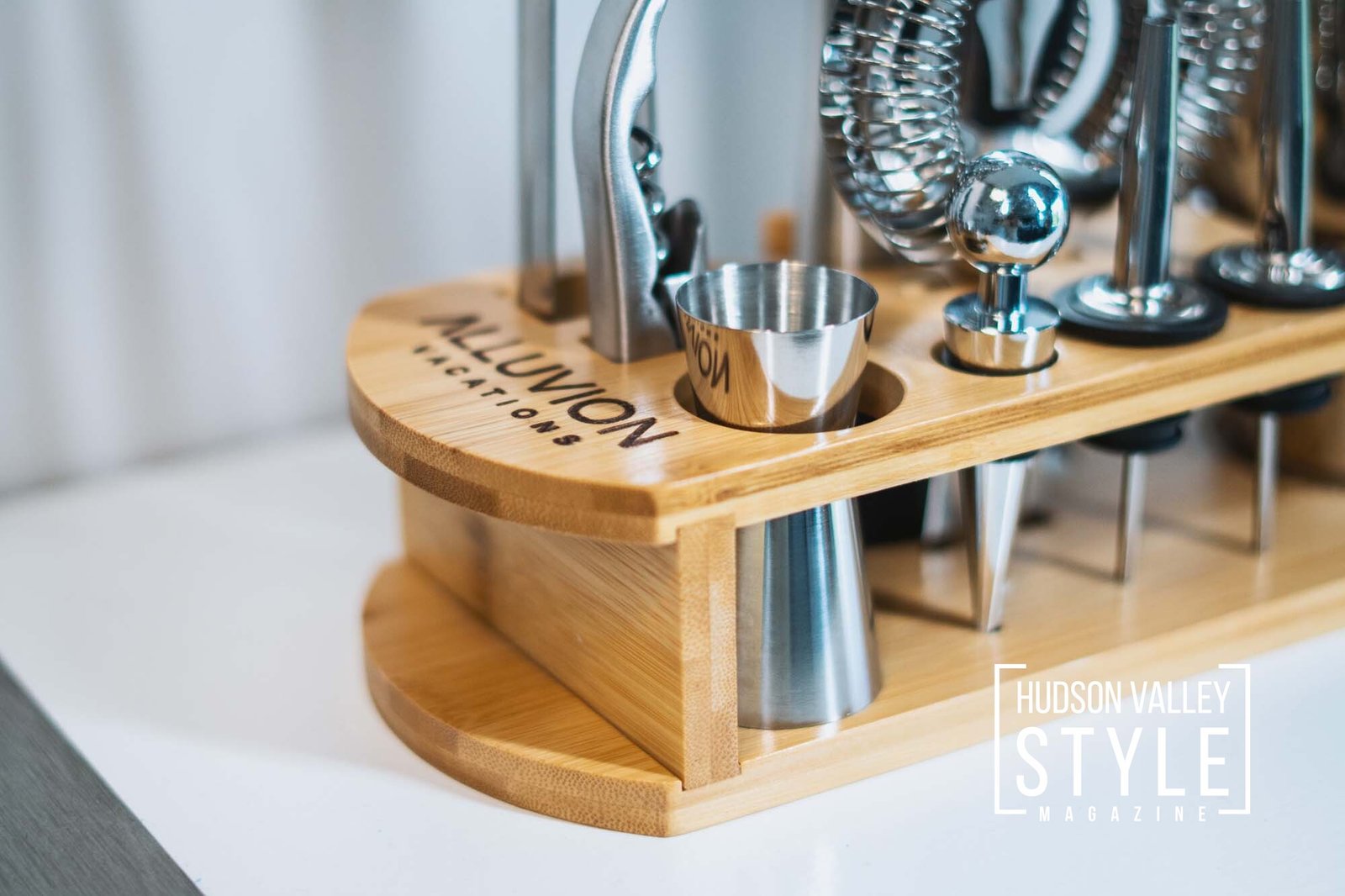
Mixology becomes especially interesting when it slows down. Instead of treating a cocktail as a delivery system for alcohol, mindful mixology turns preparation into ritual: selecting ingredients, noticing scent, measuring, stirring, tasting, garnishing, and actually paying attention to what is happening in the glass. Alluvion Vacations explores this philosophy in its feature on artisanal mixology, where drinks become part of the sensory storytelling of a destination.

The Hudson Valley makes that ritual particularly easy to localize. Apple spirits, cider, wine, botanical bitters, fresh herbs, berries, honey, and seasonal produce can connect a drink directly to the surrounding agricultural landscape. Orchard-to-glass suddenly becomes more than a cute phrase invented by someone wearing an apron in Brooklyn. Here, there are actual orchards outside.

The Sunset Ridgeline Cocktail
A Ridgeline ritual can remain beautifully uncomplicated. Begin with a Hudson Valley apple spirit or local cider, add a restrained dash of botanical bitters, fresh herbs such as rosemary or mint, and enough sparkling water to keep the whole affair bright and leisurely. A slice of local apple or citrus finishes it. For a zero-proof version, skip the spirit and build around cider, herbs, bitters formulated without alcohol, or a botanical mixer. The point is attention rather than intoxication: make one drink beautifully, take it outside, and let sunset handle production design.

Mindful drinking belongs naturally inside a broader conversation about wellness because intention changes the experience. Slower consumption, thoughtful ingredients, hydration, food, and the freedom to choose a mocktail all make the ritual more inclusive. Nobody needs to perform decadence to enjoy luxury. Sometimes luxury is an excellent glass, a cold drink, fifty miles of visibility, and absolutely no one asking whether you would like to start a tab.

Experiential Hospitality Begins With Feeling
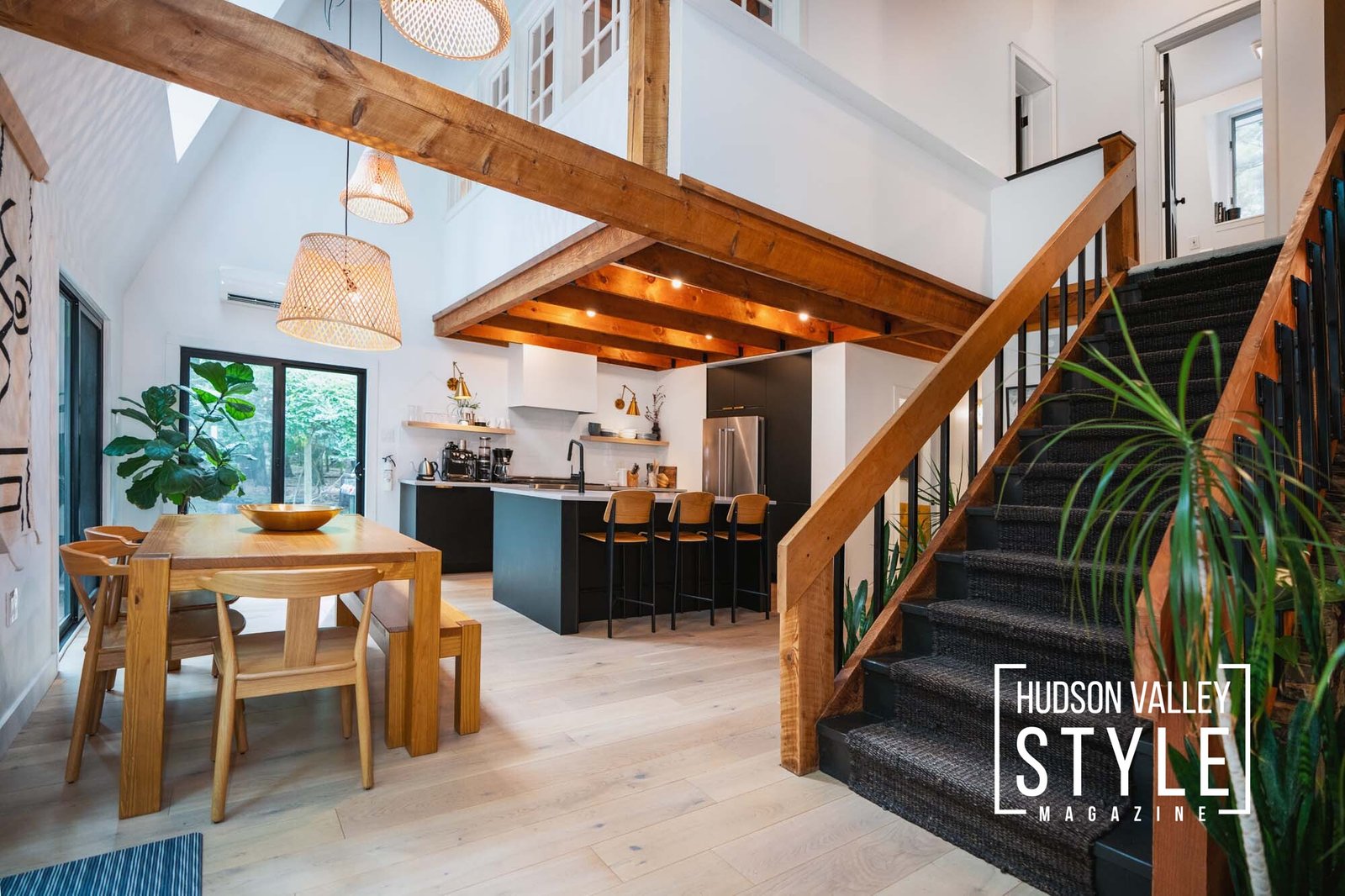
The larger idea behind the Newburgh Ridgeline Retreat is experiential hospitality: designing a stay around how a place makes someone feel rather than around a checklist of amenities. A hot tub can be wonderful. So can a beautiful kitchen. Yet the emotional experience comes from relationships between those elements: privacy, light, landscape, autonomy, texture, scent, sound, food, ritual, and time.

That approach also changes the role of the host. Great hospitality does not always mean being physically present. Sometimes it means anticipating needs so thoughtfully that intervention becomes unnecessary. The house works. Arrival feels intuitive. The environment feels cared for. Guests understand how to inhabit it. Hospitality becomes almost invisible, which may be the highest compliment one can give it.

People’s Hospitality and the Local Economy
The experience also connects to the broader People’s Hospitality Movement, an evolving idea about who benefits when people travel through the Hudson Valley and Catskills. Tourism becomes more meaningful when spending circulates through local homeowners, cleaners, contractors, farmers, makers, restaurants, artists, wineries, cideries, distilleries, and hospitality professionals rather than disappearing into a distant corporate abstraction.
That philosophy aligns naturally with the regional approach developed by Alluvion Vacations in Newburgh. A well-designed vacation rental can act as a portal into the surrounding economy, directing travelers toward local food, local drinks, local experiences, and a deeper relationship with the destination itself.

Sustainability Feels Better When It Feels Local
Sustainable travel also becomes more tangible at this scale. Choosing regional products, supporting nearby producers, staying longer, reducing unnecessary service layers, and experiencing a destination through its existing landscape can all make tourism feel more connected to place. Alluvion Vacations expands on that philosophy in its discussion of sustainable travel and hospitality in the Hudson Valley and Catskills.

Sustainability works especially well when it avoids the moralizing tone that has occasionally made environmentalism sound like homework assigned by an especially disappointed substitute teacher. Local cider tastes good. A walk through orchard country feels good. Supporting regional makers feels good. Using less, slowing down, and paying attention can improve the experience rather than diminish it. Pleasure and sustainability have always had more in common than marketing departments tend to admit.

The New Luxury Is Being Left Alone Beautifully
The Newburgh Ridgeline Retreat makes a persuasive case for a softer, more autonomous version of Hudson Valley luxury. Its appeal comes from the relationship between privacy and place: orchard views, open sky, contactless freedom, local flavors, and enough breathing room to remember what your own thoughts sound like.
Call it experiential hospitality. Call it mindful travel. Call it hushpitality. The terminology can evolve. The feeling is remarkably simple: arrive, close the door, make something delicious, walk outside, and enjoy the radical luxury of having the whole experience belong to you.
// Book this Newburgh home on Airbnb →
// Learn more at Alluvion Vacations →