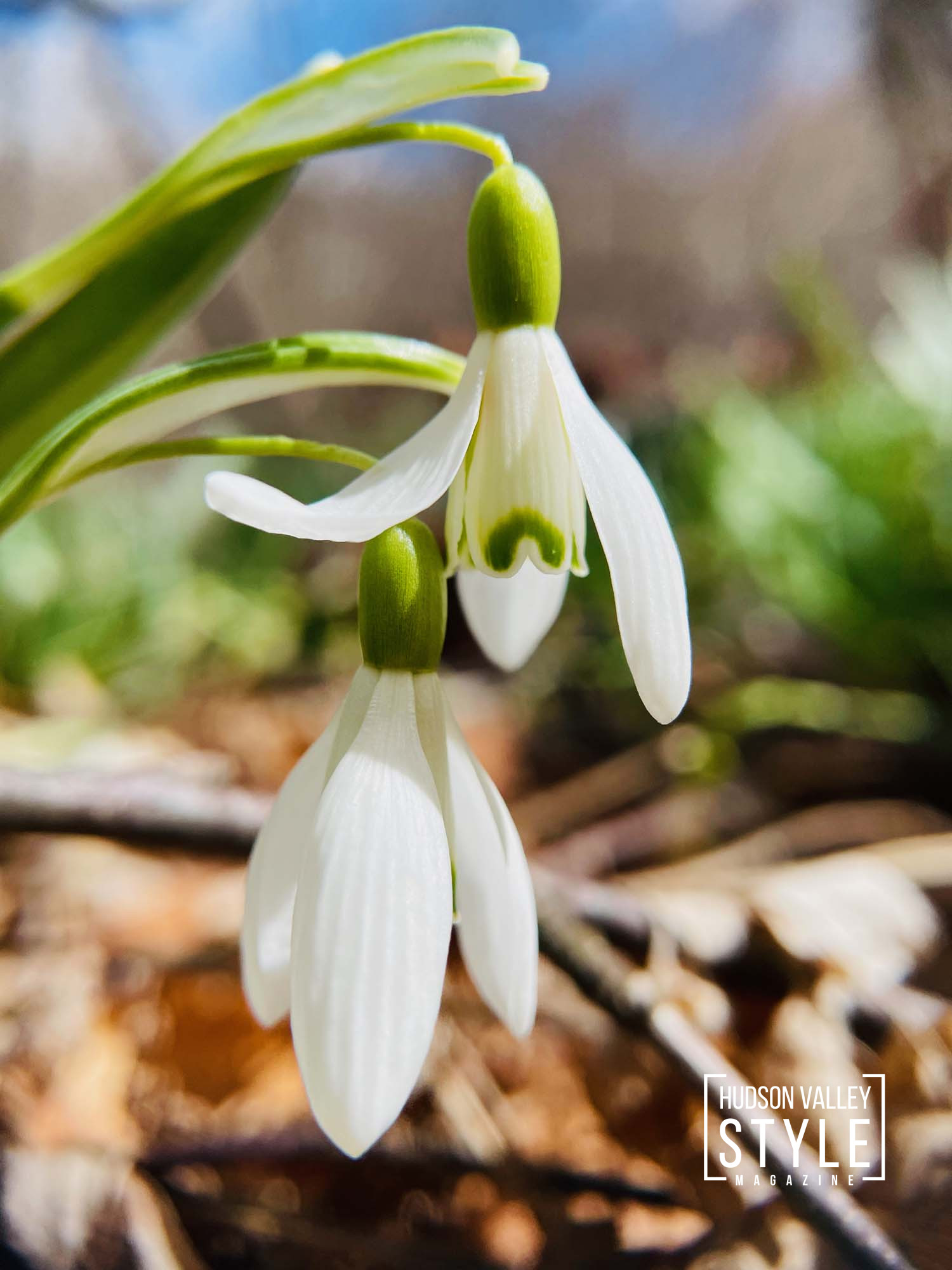
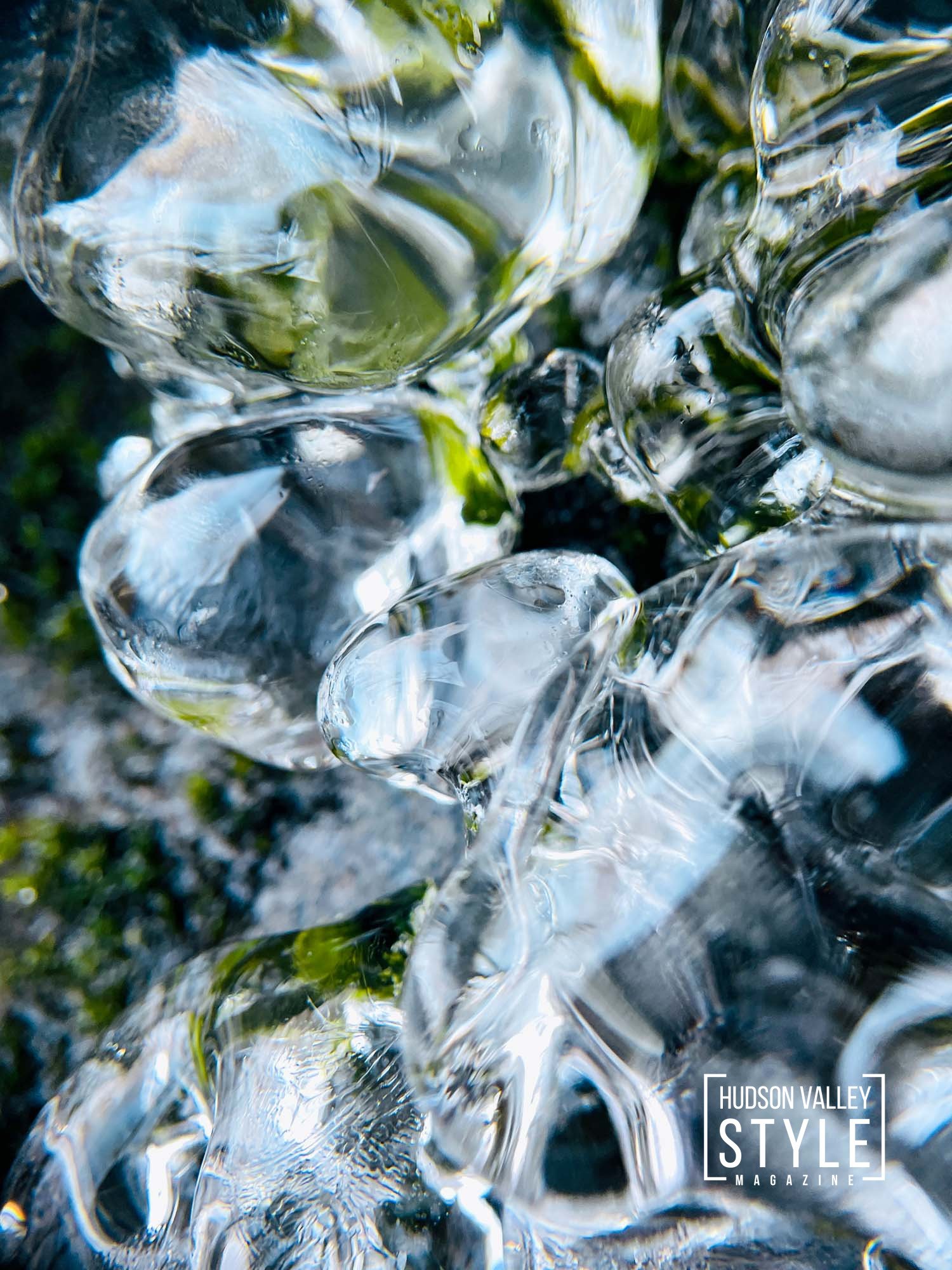
Winter strips the Hudson Valley down to its quiet intelligence. Without foliage, without spectacle, nature speaks in smaller gestures—fibers of ice, seed husks suspended in air, water pausing mid-movement. I photograph winter not to document landscapes, but to enter them. Close-ups allow me to step past scenery and into structure, rhythm, and presence. What remains when the noise recedes carries a deeper order—one that feels ancient, intentional, and endlessly calming.
The Shape of Winter – Nature Photo Story by Maxwell Alexander – Nature Photography – Presented by Duncan Avenue Studios

My work has long explored the idea that beauty follows laws older than culture. In winter, those laws become visible. Ice forms with a logic that mirrors galaxies. Water bends, freezes, releases, and reforms with a patience that feels aware. Seed heads, stripped and exposed, resemble constellations or neural networks. When viewed closely, nature reveals patterns that echo cosmic intelligence—repetition, balance, flow, and restraint. These qualities are not symbolic; they are lived realities embedded in matter itself.

Close-up nature photography allows for intimacy without intrusion. By removing scale and context, the image becomes a field of study rather than a destination. The viewer no longer stands outside the scene but enters it visually. A frozen droplet becomes a universe. A thread of ice becomes a timeline. The mind slows because it has nowhere else to go. Attention settles. Breath deepens. Thought softens.

This approach connects directly to emotional wellness and art therapy. Healing does not always require explanation or narrative. Sometimes it requires stillness and focused observation. Art, when approached as a meditative practice, offers a way to regulate the nervous system without force. Looking closely at natural forms activates the same pathways as mindfulness practices—attention, curiosity, non-judgment. Winter supports this naturally. The season encourages pause, reflection, and inward movement, making it an ideal partner for visual meditation.

To use this gallery as a visual meditation, choose a single photograph. Sit comfortably. Let your eyes rest on one detail—an edge of ice, a filament, a curve of water. Stay with it for a few minutes. Notice texture, light, repetition. When the mind wanders, gently return to the image. There is no goal beyond presence. Over time, the image begins to feel less like an object and more like a companion. The body responds by relaxing. The mind follows.

This practice mirrors the core of art therapy: engagement without demand. The artwork holds space so the viewer does not have to. In winter, nature offers that same holding. The Hudson Valley, in its frozen quiet, becomes a place of restoration rather than endurance. Studying these images offers a reminder that beauty persists without effort and intelligence exists beyond urgency.

Winter remains my favorite season because it asks for nothing and gives clarity in return. Through close-ups, I try to honor that exchange. The Shape of Winter invites viewers to slow down, look closer, and reconnect with the calm order that underlies both nature and the self.
Duncan Avenue Studios Photo Gallery: The Shape of Winter – Nature Photo Story by Maxwell Alexander