
The New Hudson Valley Aesthetic: 2026 Forecast on Sylvan Chic and the End of the Farmhouse Cliché – By Maxwell Alexander, MA(FIT)/BFA(SVA), Editor-in-Chief, Hudson Valley Style Magazine – Photography by Maxwell Alexander for Alluvion Media

After years documenting the intersection of spatial psychology, beauty, and embodied wellbeing, one principle continues to hold: interiors shape nervous systems. A room exists as a biochemical intervention as much as a visual one. The emerging interiors across the Hudson Valley suggest a cultural maturation — a willingness to engage with depth, shadow, and material honesty rather than theatrical rustic cosplay.

The Midnight Garden and the Neuroaesthetics of Shadow
The bathroom has completed its transformation from hygienic afterthought into ritual chamber. Sterile white tile grids — reminiscent of outpatient facilities — surrender to immersive botanical narratives unfolding across walls saturated in deep pigment. Think florals rendered at cinematic scale, emerging from backgrounds darker than a Catskills sky at astronomical midnight.

This chromatic gravity produces more than aesthetic intrigue. Deep tonal environments activate biophilic pattern recognition systems embedded within human perception. Shadow creates psychological containment; contrast heightens sensory presence. The result feels slightly decadent, intellectually playful, and spiritually grounding — an interior equivalent of stepping into a hidden forest clearing where time dilates and cortisol politely excuses itself.

Lighting as Architectural Jewelry
Lighting has emancipated itself from utilitarian anonymity. The fixtures appearing across 2026 interiors behave as sculptural punctuation marks, defining spatial rhythm with quiet authority. Gone is the era of aggressively nostalgic Edison bulbs performing industrial cosplay. In their place: tiered glass forms, hand-blown globes, and diffused luminosity that recalls sunlight filtered through canopy leaves.

Exceptional lighting operates as spatial choreography. During daylight hours, the object reads as suspended sculpture. At night, it transforms into an atmospheric hearth — a gravitational anchor around which conversation naturally orbits. Overscaled silhouettes function particularly well in Hudson Valley architecture, where vertical volume invites drama without sacrificing intimacy.

The Kitchen Enters Witness Protection
The 2026 social kitchen demonstrates remarkable restraint by visually disappearing. Appliances integrate so seamlessly into millwork that culinary mechanics become discreet supporting actors rather than attention-seeking protagonists. The result resembles a hospitality salon rather than a workplace for domestic labor.

Waterfall islands in warm mineral compositions such as travertine replace the cool austerity of hyper-polished marble. Surfaces communicate geological time rather than showroom sterility. This evolution reflects a broader cultural pivot toward environments that privilege tactile pleasure over performative minimalism. Conversations involving Pinot Noir achieve greater nuance when stainless steel no longer dominates peripheral vision.

Windows as Curatorial Frames
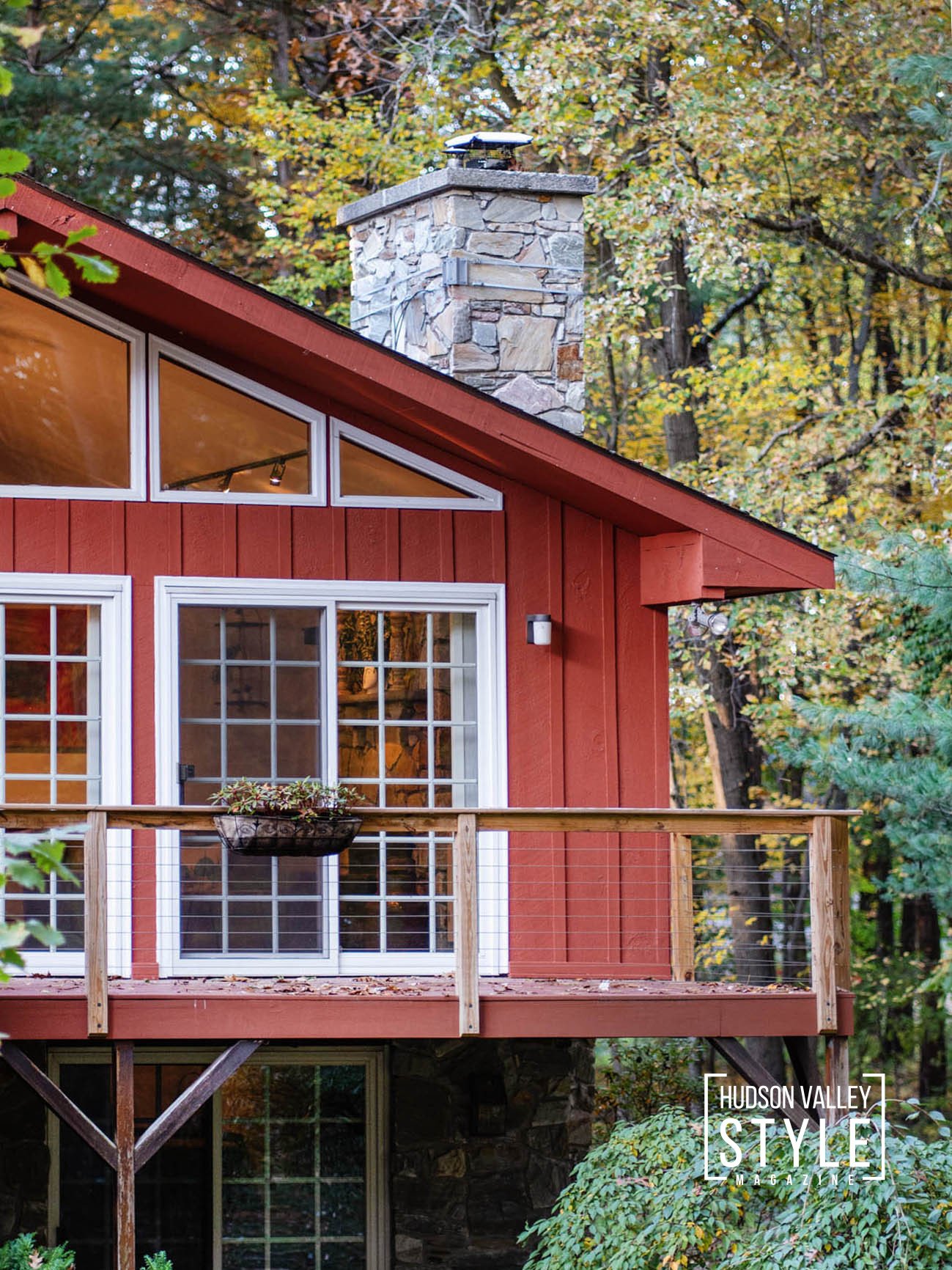
Interior space reaches its highest expression when it acknowledges the landscape as collaborator. Matte black window frames function as deliberate visual editing tools, transforming the Hudson Valley terrain into living artwork. Crisp linear boundaries heighten perception of seasonal color shifts — the chromatic intelligence of maples in October, the ecstatic greens of May.

The restrained palette of contemporary interiors — bone, oat, raw linen, mineral clay — permits exterior complexity to occupy center stage. Such compositional humility produces psychological spaciousness. Humans evolved to read landscapes for survival information; framing nature with clarity allows ancient perceptual systems to relax into trust.

The Tactile Renaissance
After a prolonged flirtation with emotionally ambiguous gray palettes, warmth returns with intellectual confidence. 2026 interiors embrace what may be described as Lush Minimalism: environments where restraint coexists with sensual materiality. Bouclé upholstery invites touch, white oak surfaces display grain patterns reminiscent of topographic maps, and textiles perform as sensory punctuation.

Texture influences mood with measurable consistency. Materials possessing visual depth and tactile complexity communicate stability to the nervous system. The most compelling interiors emerging across the region demonstrate an understanding that comfort represents a sophisticated design achievement rather than a decorative afterthought.

Sylvan Chic ultimately signals a broader cultural shift. The Hudson Valley no longer performs rural mythology for metropolitan approval. Instead, it offers environments aligned with ecological intelligence, psychological restoration, and aesthetic maturity. Homes become instruments of continuity — resilient, sensuous, and grounded in the quiet authority of landscape itself.

Alluvion Media Photo Gallery: The New Hudson Valley Aesthetic: 2026 Forecast on Sylvan Chic and the End of the Farmhouse Cliché