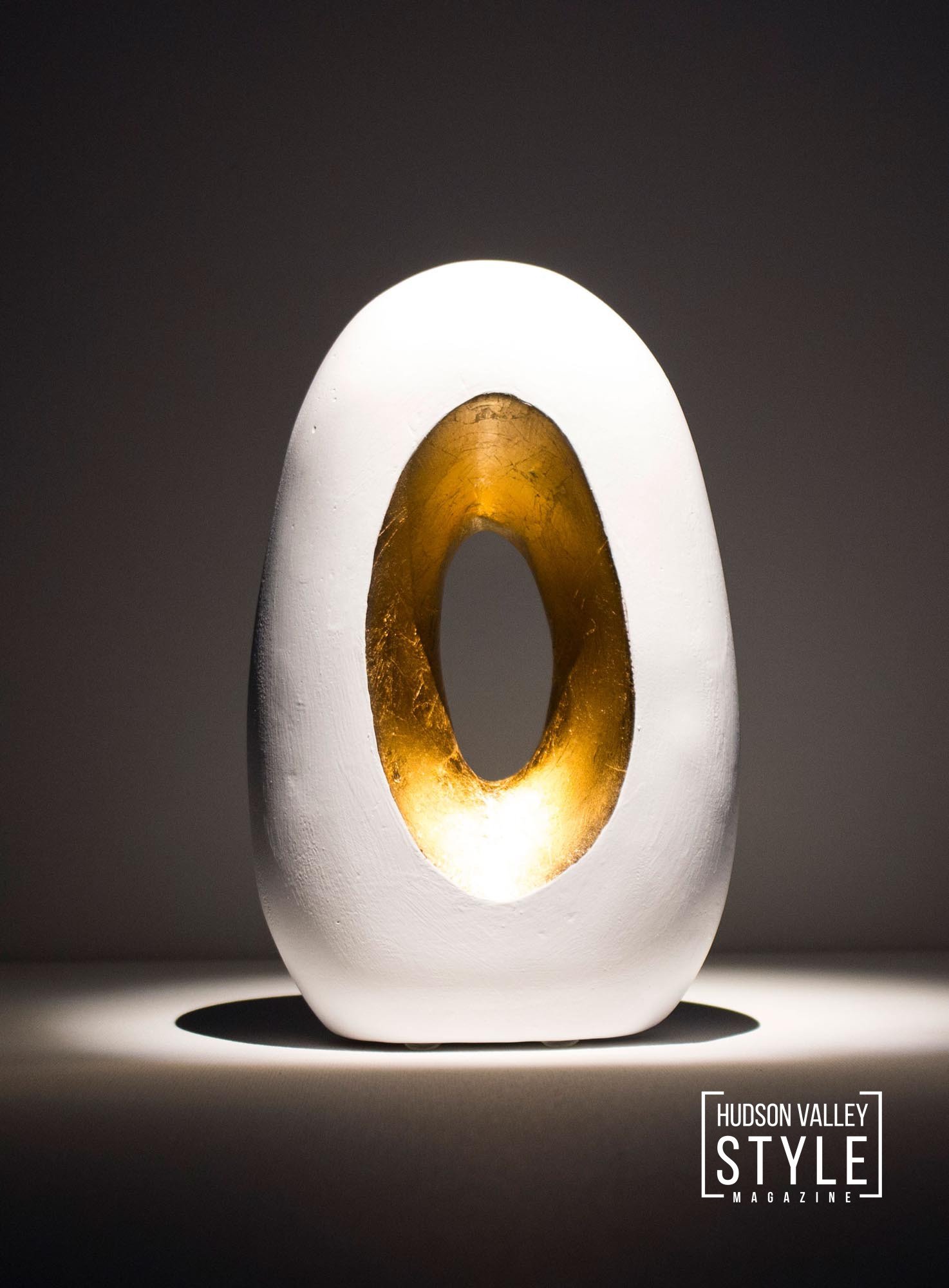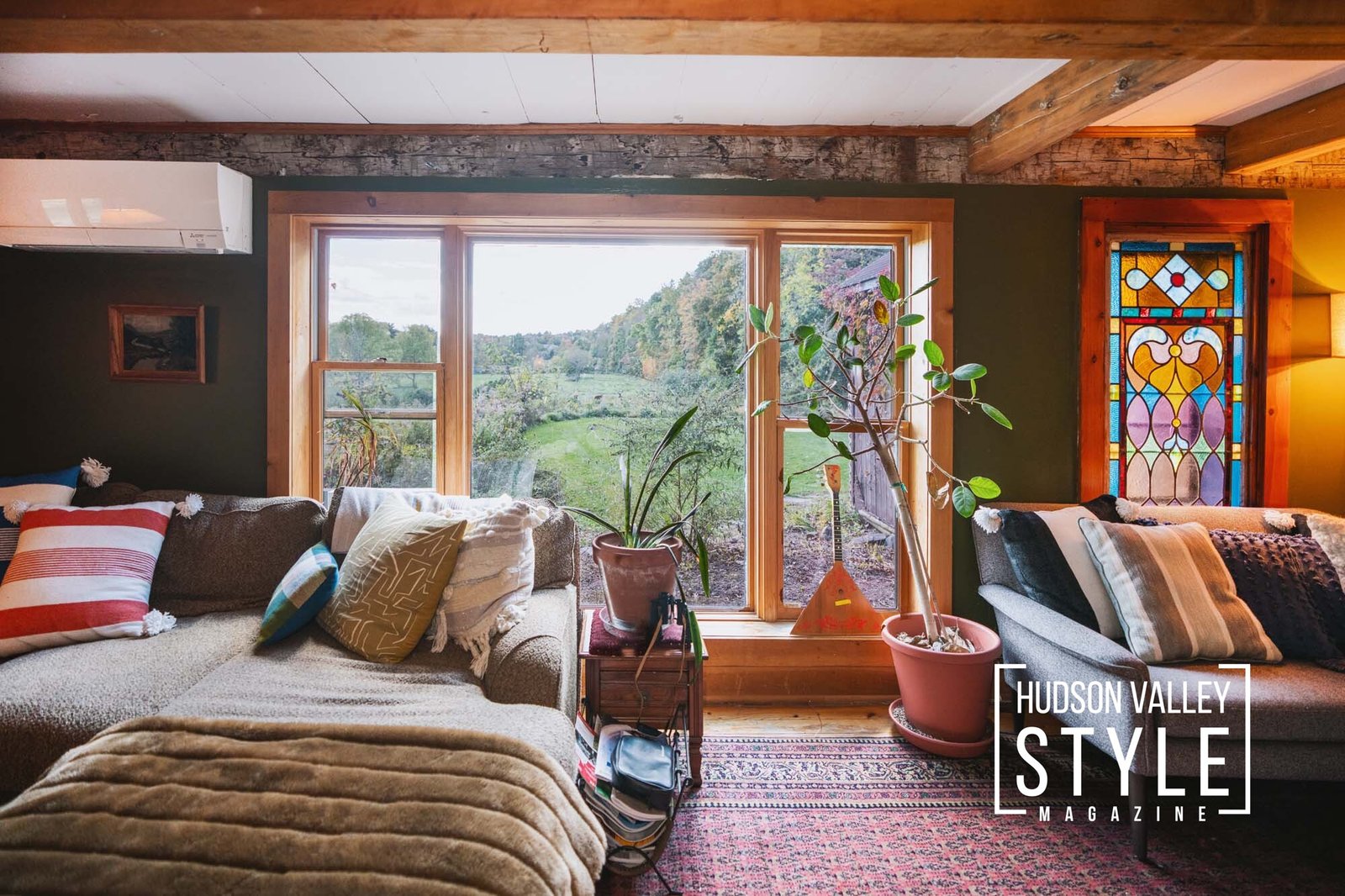
SAUGERTIES, N.Y. — Chestnut Hill Farm is an 1840s farmhouse in the Catskill foothills where guests cook, read and sleep among antiques that a house museum would keep behind a rope. In Episode 5 of Experiential Hospitality 101, Maxwell Alexander reads the house the way an exhibition designer reads a museum, in a photo study of modern rustic interior design, historic preservation and dark academia mood. The closeups show the lamps, the glass and the mirrors that guests are free to use.
Modern Rustic Interior Design as a Night at the Museum: Inside a Preserved 1840s Hudson Valley Farmhouse – Experiential Hospitality 101 with Maxwell Alexander, MA(FIT)/BFA(SVA) – Wellness Interior Design – Photography and Visual Study by Maxwell Alexander | In partnership with Alluvion VacationsPartnership. Chestnut Hill Farm is managed by Alluvion Vacations, part of the Alluvion family of brands behind Hudson Valley Style Magazine, a queer-owned independent publication. See our Editorial Standards.

The House as a Museum You Can Sleep In
I studied exhibition and experience design in graduate school, and I still read a room the way an exhibition designer reads a gallery: what is on display, how the light falls on it, where the visitor stands and what the visitor is allowed to do. Chestnut Hill Farm rewards that reading. The house dates to the 1840s and still shows its timber beams, wood-paneled walls and old floors. Every room holds objects that were chosen one at a time.
Will Fellows profiles gay men across the United States who rescued and restored old buildings and saved the objects inside them in A Passion to Preserve: Gay Men as Keepers of Culture. Alluvion Vacations is queer-owned, and looking after an 1840s farmhouse puts us in that company.
A museum sends you home at closing time. Here you stay the night, cook in the kitchen and wake up among the objects. That is how I define experiential hospitality in a historic house: preservation keeps the objects, modern rustic interior design makes them comfortable to live with, and the guest uses them. Episode 4, The Suburban Cowboy Philosopher, made the case for sunlight, privacy and leisure, and this house on ten private acres has room for all three.
The Collection: Objects That Arrive With a Past
On a console against a plum wall, a framed landscape, a small dark horse and a potted plant share one lamp, with no label to explain them. Museum researchers John Falk and Lynn Dierking showed that visitors build meaning from their own memories as much as from the display. A horse on a shelf becomes a grandfather’s farm for one guest and a childhood toy for another.

A clock under a glass dome is the most museum-like object in the house. A reed diffuser stands right beside it, and the sideboard around them is still in daily use. John Potvin’s Bachelors of a Different Sort studies how queer men in Britain between 1885 and 1957, from Oscar Wilde to Cecil Beaton, built their homes around the things they collected. Sara Ahmed writes in Queer Phenomenology that feeling at home depends partly on which objects are within reach. A house full of chosen objects that guests can pick up puts both ideas to work, a theme I started in Episode 3.

Exhibition Lighting With Small Lamps
Museums light the object and leave the rest of the room dim. Chestnut Hill Farm does the same with ordinary lamps. The dining room chandelier wears small shades, so the light lands on the table and on the faces around it.

Table lamps handle the rest: a lamp on a brass and crystal column, a fringed shade over a ceramic rooster, a lamp built on an old cast-iron hand mill with an amber glass body. Each one lights a small area and the object inside it, and the shadow in between gives the rooms their dark academia mood. It also made my job easy, because every lamp had already framed a picture for me.

Sightlines: Mirrors and Stained Glass
Exhibition designers plan sightlines so each step reveals the next object. Old farmhouses do it through doorways and additions, and mirrors help. From one spot in this house a round gilt mirror holds a panel of stained glass and a lit lampshade in one frame. Aaron Betsky gives mirrors and antiques a place in the history of queer interiors in Queer Space: Architecture and Same-Sex Desire, where he describes rooms built like stage sets.

Below it sits the wooden record player, with a knitted throw on the chair beside it. You look at the mirror first, and then you put a record on.
Episode 1Rethinking Wellness Travel Through Art, Nature and Privacy →Episode 2The Architecture of Scent →Episode 3Designing Feelings With Natural Objects →Episode 4The Suburban Cowboy Philosopher →

Please Touch
Guests are welcome to touch. The milk glass on the sideboard, the cut glass decanter and tumblers, the piano and the records are all there to be used. Freeman Tilden, who wrote the founding text on heritage interpretation, put provocation ahead of instruction. Pouring a drink from a cut glass decanter in a lamplit room does that better than a wall label.

B. Joseph Pine and James Gilmore describe the same move in The Experience Economy, where the guest goes from watching to taking part. A guest here remembers pouring from the decanter as well as seeing it.

Where the Modern Comes In
Preservation practice in the United States has a useful word for this approach: rehabilitation, which means keeping a historic building in use by adapting it while holding on to the features that carry its character. Modern rustic interior design is the domestic version. In the bedroom, white bedding and pale walls sit under a dark timber ceiling, so the old timber is what you look at and the linen is what you sleep in.

In the bathroom, a grid of white tile with yellow accents meets a gilt mirror over a pedestal sink.

The Porch and the Scent
The screened porch, with its long table under painted beams, looks out on ten private acres of meadow, pond and trails.

Alluvion reed diffusers placed through the house add scent to the visit, the subject of Episode 2 and of the Winds of Stormking signature blend.

Five Lessons in Modern Rustic Interior Design to Take Home
- Keep the oldest surface in each room visible and build around it: a beam, a paneled wall, a worn floor.
- Light objects with lamps at table height and let the corners stay dark.
- Hang one mirror where it catches a window or a lamp, so the room composes itself as you walk.
- Choose objects one at a time, and choose ones people may handle.
- Add new comfort in plain materials: white linen, simple tile, a good mattress.
The full visual study from Chestnut Hill Farm follows below.
Modern Rustic Interior Design: Questions and Answers
What is modern rustic interior design?
Modern rustic interior design pairs old natural materials such as timber beams, wood paneling and worn floors with plain modern comforts like white linen, simple tile and good lighting. The old surfaces stay visible and the new pieces stay simple.
What is dark academia interior design?
Dark academia interior design uses dark wall colors, warm lamplight, books, framed art, antiques and musical instruments, a look borrowed from old libraries and college halls. At Chestnut Hill Farm it shows up as plum and olive walls, shaded lamps, a piano and a record player.
How do you decorate a historic farmhouse and keep its character?
Keep the oldest surface in each room visible, light it with table lamps and add new comfort in plain materials. Choose objects one at a time and let people use them.
Can you stay at the farmhouse in this article?
Yes. Chestnut Hill Farm in Saugerties, New York, is an 1840s farmhouse on ten private acres managed by Alluvion Vacations, and it sleeps up to ten guests.
// Spend a Night at the Museum: Book Chestnut Hill Farm in Saugerties →
// Read the Full Story of the 1840s Saugerties Farmhouse →
// Discover More Experiential Hospitality 101 with Maxwell Alexander →
// Shop Fine Art for Wellness Interior Design in the HVSM Gift Shop →
// Subscribe to HVSM Newsletter →
// Visual Study: Modern Rustic Interior Design at an 1840s Saugerties Farmhouse – Photography by Maxwell Alexander


Research and Theoretical Sources
- Alexander, Maxwell. “Experiential Hospitality: Rethinking Wellness Travel Through Art, Nature, and Privacy.” Hudson Valley Style Magazine, 2026. Episode 1 of Experiential Hospitality 101.
- Alexander, Maxwell. “Designing Feelings: Natural Objects and the Emotional Architecture of Experiential Hospitality.” Hudson Valley Style Magazine, 2026. Episode 3 of Experiential Hospitality 101.
- Alexander, Maxwell. “The Suburban Cowboy Philosopher: Sunlight, Privacy, Leisure and the Economics of Simply Being Human.” Hudson Valley Style Magazine, 2026. Episode 4 of Experiential Hospitality 101.
- Ahmed, Sara. Queer Phenomenology: Orientations, Objects, Others. Duke University Press, 2006.
- Betsky, Aaron. Queer Space: Architecture and Same-Sex Desire. William Morrow, 1997.
- Fellows, Will. A Passion to Preserve: Gay Men as Keepers of Culture. University of Wisconsin Press, 2004.
- Potvin, John. Bachelors of a Different Sort: Queer Aesthetics, Material Culture and the Modern Interior in Britain. Manchester University Press, 2014.
- Falk, John H., and Lynn D. Dierking. The Museum Experience. Whalesback Books, 1992.
- Pine, B. Joseph II, and James H. Gilmore. The Experience Economy. Harvard Business School Press, 1999.
- Tilden, Freeman. Interpreting Our Heritage. University of North Carolina Press, 1957.
- U.S. National Park Service. The Secretary of the Interior’s Standards for the Treatment of Historic Properties.